
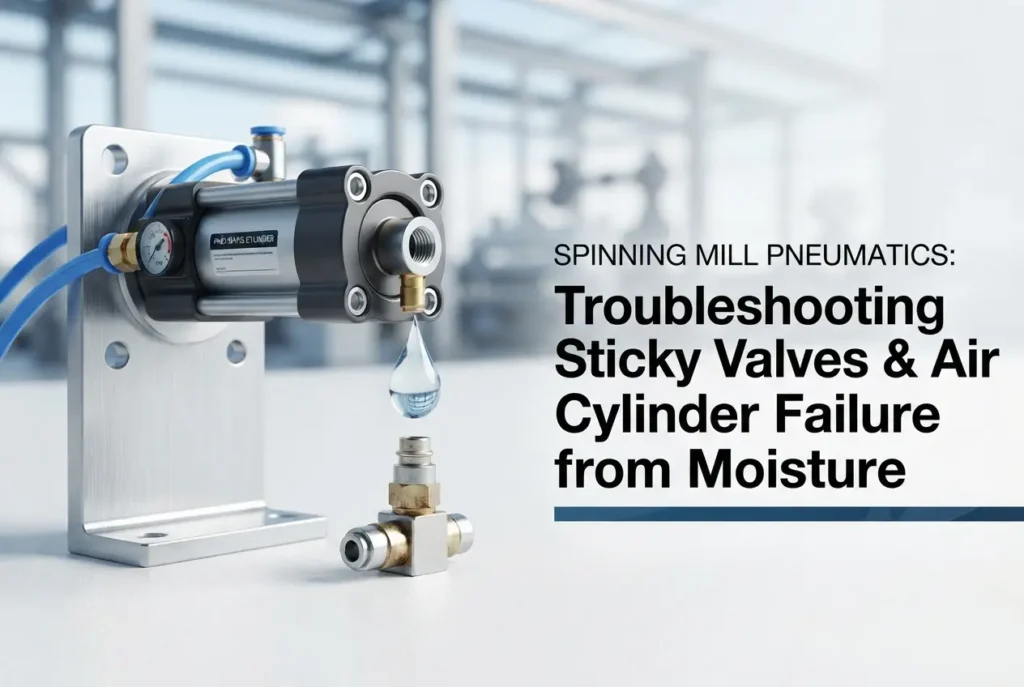
In a modern spinning mill, compressed air serves as the unseen workforce driving automation across the entire production line. From blowroom equipment and carding machines to draw frames, speed frames, and ring frames with auto-doffers, pneumatic components execute thousands of precise, rapid movements every single shift. Solenoid valves fire continuously, and pneumatic cylinders cycle back and forth to keep yarn production flowing without interruption.
However, when moisture penetrates your compressed air lines, the precision of your spinning machinery quickly degrades. Plant maintenance teams often find themselves reacting to sudden cylinder sluggishness, erratic valve switching, or mechanical jamming during critical cycles like auto-doffing. This moisture not only disrupts production schedules but also causes premature wear and tear on expensive pneumatic actuators and control systems.
Understanding how water enters pneumatic lines, identifying the warning signs of component failure, and systematically troubleshooting sticking valves and damaged cylinders are vital skills for keeping spinning mills running efficiently. Let us examine the mechanics behind these pneumatic failures and the practical solutions you can implement on your shop floor.
Why Moisture is the Nemesis of Spinning Mill Pneumatics
Textile mills operate under specific environmental conditions, often requiring strict humidity control within the production sheds to maintain fiber strength and reduce static electricity. Meanwhile, the air compressors generating the motive power for downstream machinery draw in ambient air loaded with moisture. As air is compressed, its ability to hold water vapor drops, causing excessive condensation in distribution lines if the treatment equipment is inadequate or poorly maintained.
When moist air reaches the point of use, it wreaks havoc inside pneumatic hardware through three primary mechanisms:
- Washing Away Factory Lubrication: Most modern pneumatic valves and cylinders rely on pre-lubrication applied at the factory. Liquid water strips this specialized grease from spool seals, piston seals, and barrel walls, leading to high friction, rapid wear, and premature seal destruction.
- Sludge and Emulsion Formation: When condensed water mixes with minute oil particles passing through the system, it forms an abrasive, milky sludge. This emulsion clogs narrow pilot orifices in directional control valves and coats cylinder bores. You can learn more about managing this by recognizing the symptoms of oil carryover in rotary screw compressors and how to prevent product contamination.
- Corrosion and Scale Formation: Water reacts with internal ferrous components, creating rust particles that flake off and circulate through the system. Even inside anodized aluminum cylinders, moisture accumulation can cause pitting corrosion if stagnant water rests against seals over weekend shutdowns.
Troubleshooting Sticky Valves: Diagnostics and Solutions
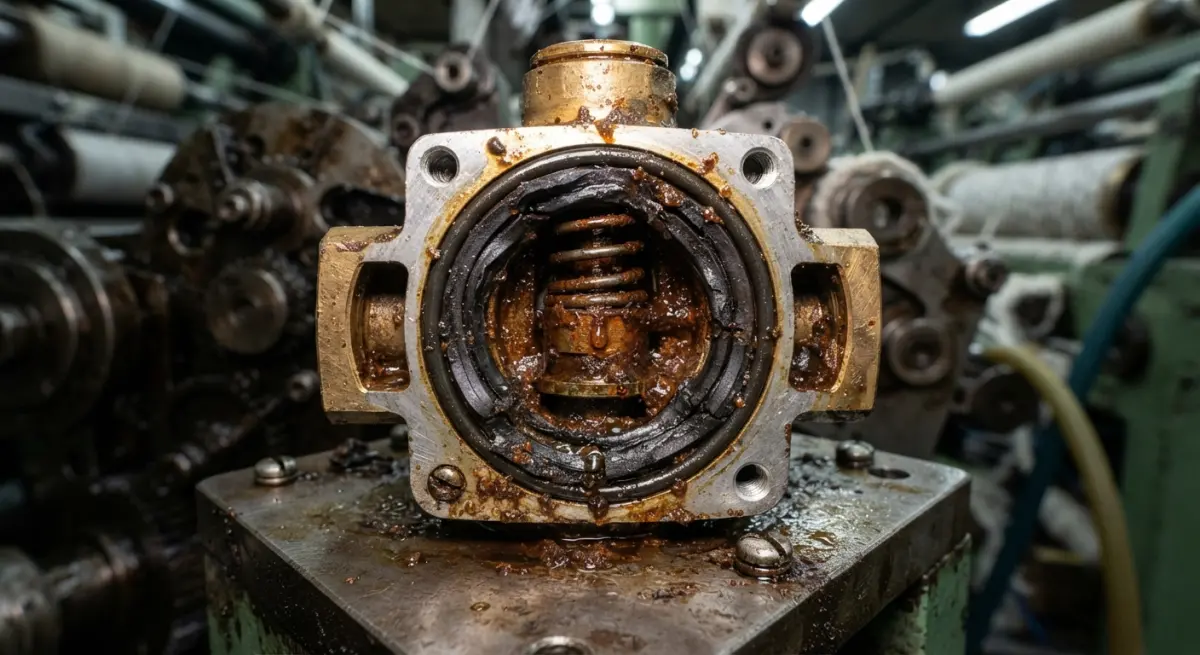
Directional control valves in spinning mills are designed to cycle rapidly with minimal friction. When moisture contaminates the valve, the spool either hesitates or sticks completely, causing the machine controller to register an error or miss a cycle step.
1. Inspecting the Pilot Exhaust and Orifices
Most solenoid valves on automated spinning machinery are pilot-operated rather than direct-acting. This design relies on a microscopic orifice to divert air pressure and shift the main spool. Moisture, rust flakes, or emulsified oil can easily plug this tiny passageway. If the solenoid energizes—evident by an illuminated indicator light and an audible click—but the valve does not shift, the pilot passage is likely choked with moisture-borne debris. Disassemble the valve, clean the internal passages with an approved solvent, and verify that the miniature return springs are free from rust.
2. Checking for Swollen or Degraded Seals
Standard nitrile (NBR) or polyurethane seals exposed to continuous moisture and degraded synthetic compressor oils can swell, soften, or harden prematurely. A swollen seal creates excessive drag against the valve sleeve, preventing the return spring from pushing the spool back into place. If you disassemble a valve and the spool feels excessively tight to move by hand, replace the seal pack and evaluate downstream air purity.
Cylinder Failure: Recognizing the Symptoms of Moisture Ingress
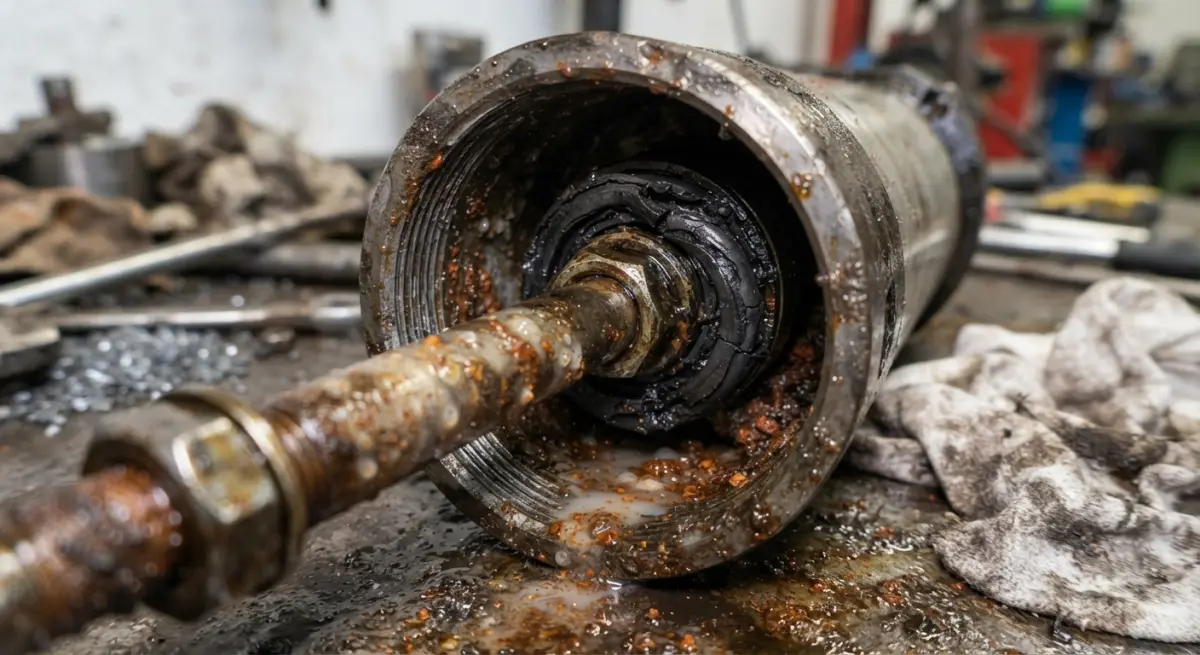
Air cylinders on ring frame auto-doffers, lap formers, and roving frames endure relentless duty cycles. Moisture ingress accelerates cylinder breakdown in ways that are often mistaken for mechanical misalignment or improper supply pressure.
Jerky Motion and “Slip-Stick” Effect
When internal cylinder lubricant is washed away by condensation, the friction between the piston seal and the cylinder barrel increases dramatically. The piston requires elevated pressure to overcome static friction, causing it to lurch forward suddenly once it breaks free. This “slip-stick” phenomenon ruins positioning accuracy and can damage yarn packages or mechanical linkages.
Bypass Leakage Past the Piston
Water-borne scale acts as an abrasive paste inside the cylinder. Over time, it scores the smooth inner bore of the cylinder tube. Once the bore is grooved, compressed air bypasses the piston seal, flowing directly from the pressurized side to the exhaust side. The cylinder loses holding force, moves sluggishly, and wastes significant volumes of compressed air.
Rod Seal and Wiper Breakdown
Textile environments are naturally laden with airborne lint and micro-dust. Under normal conditions, the cylinder rod wiper prevents this lint from entering the cylinder. However, when moisture migrates along the piston rod from the inside, it mixes with dry lint on the outside, creating a gummy paste around the rod seal. This paste degrades the seal lip, resulting in continuous rod leakage and eventual mechanical binding.
Best Practices to Protect Textile Pneumatics from Moisture
Treating symptoms by continually replacing sticky valves and worn cylinders is an expensive approach to maintenance. Eliminating the root cause requires optimizing your air treatment and moisture separation strategy.
Maintain Effective Air Drying Systems
Relying solely on compressor aftercoolers is insufficient for textile manufacturing. A dedicated drying unit is necessary to bring the pressure dew point down to an acceptable level where condensation cannot occur within the distribution ring. For facilities looking to protect precision instrumentation, reviewing why factories need a refrigerated air dryer offers clear perspective on keeping moisture out of delicate lines.
Furthermore, maintaining moisture control requires an understanding of thermodynamics across changing seasonal temperatures. Maintenance managers should familiarize themselves with compressed air dew point why atmospheric dew point and pressure dew point are not the same to avoid false assumptions about dryness based solely on ambient conditions.
Upgrade Point-of-Use Filtration (FRL Units)
Even with central drying, point-of-use Filter-Regulator-Lubricator (FRL) units act as the final defense for critical spinning machines. Ensure that every machine bank features an auto-draining particulate and coalescing filter. If your operators must manually open drain petcocks, moisture will inevitably back up into the pneumatic manifold whenever a drain schedule is missed. Choose filters designed with automatic zero-loss float drains to ensure reliable liquid discharge.
Optimize Piping Drops and Header Layouts
Pneumatic drops feeding spinning machines should always take off from the top of the main distribution header (known as a “gooseneck” or swan-neck bend) rather than the bottom. Bottom take-offs act as natural collection troughs, funneling any condensation directly into the solenoid valves of that machine. Ensure your main distribution headers are sloped slightly toward dedicated drop legs equipped with reliable automatic drain traps.
Keep Your Spinning Mill Operating at Peak Efficiency
Moisture-induced pneumatic failure should never be accepted as standard operating wear in a textile plant. By understanding how water impairs pilot mechanisms, washes away essential seal lubrication, and abrades cylinder walls, your maintenance team can transition from reactive repairs to proactive prevention.
If your spinning mill is struggling with frequent valve stickiness, sluggish cylinder movement, or persistent water accumulation in machine drop lines, our compressed air specialists can help. Request an air compressor quote or contact our technical team to schedule an on-site system audit to optimize your air drying, filtration, and piping infrastructure today.
Frequently Asked Questions
Why do pneumatic valves stick frequently in yarn spinning and winding machines?
Valves stick primarily when moisture combines with microscopic cotton lint, forming a thick paste that clogs the valve spool's tight tolerances. This water also washes away factory grease, causing severe friction, swelling of internal seals, and valve actuation failure. Maintaining clean, dry compressed air is critical to prevent this sludgy accumulation.
How does moisture cause internal seal failure and piston leakage in spinning mill air cylinders?
Moisture strips the internal protective lubricant, leading to high-friction dry-rubbing that wears down polyurethane or nitrile cylinder seals. Additionally, water mixed with ambient mill humidity causes corrosion and pitting on the cylinder barrel, which rapidly cuts seal lips and causes severe blow-by air leaks. Installing desiccant air dryers and secondary point-of-use filtration prevents this degradation.
What is the recommended compressed air dew point to stop valve sticking in textile mills?
Spinning mills require a pressure dew point of at least +3°C (Class 4 per ISO 8573-1) using refrigerated dryers, though mills with fluctuating ambient temperatures often need -20°C to -40°C desiccant drying. Maintaining this low dew point ensures water vapor will never condense into liquid inside pneumatic lines, even during cold night shifts. This completely halts moisture-induced varnish and slurry from locking directional control valves.
How can operators quickly clean sticky pneumatic valves without replacing them?
Isolate the air supply, remove the valve, and clean the internal spool and bore using an electrical contact cleaner or fast-evaporating safety solvent that leaves no residue. Inspect O-rings for swelling or fraying, replace damaged seals, and re-lubricate sparingly with an air-line-compatible pneumatic grease before reinstalling. If the valve sticks again quickly, inspect your upstream moisture separators and drain traps immediately.
Why are pneumatic auto-drains failing to clear water from spinning frame drop legs?
Float-type auto-drains frequently fail because airborne lint and oily sludge bypass pre-filters, physically jamming the drain mechanism in either an open or closed position. When stuck closed, condensation floods the air drop leg and delivers liquid water directly into the drafting or doffing cylinders. Upgrading to electronic, zero-air-loss timed solenoid valves with built-in strainers significantly reduces lint clogging.