

Operating industrial machinery during a South Tamil Nadu summer is a severe test of engineering resilience. From late March through June, ambient temperatures in industrial hubs routinely soar past comfortable thresholds, accompanied by dry heat inland and stifling humidity along coastal belts. In manufacturing plants, textile mills, and processing units, rotary screw air compressors are the silent workhorses powering automation, pneumatic actuators, and packaging lines. Yet, when summer peaks, plant managers frequently face an infuriating pattern of sudden high-temperature alarms, thermal trips, and unplanned downtime.
A rotary screw compressor naturally generates massive amounts of thermal energy during the compression process. When you combine this internal heat generation with an ambient room temperature that feels like a furnace, the machine struggles to reject heat effectively. When internal temperatures cross critical operating thresholds, the onboard controller shuts the unit down to protect the air end and bearings from catastrophic seizure. While this fail-safe prevents permanent destruction, every hour of compressor stoppage disrupts factory operations, misses delivery deadlines, and drains operational revenue.
Understanding why screw compressors overheat specifically during the summer months in regions like South Tamil Nadu is the first step toward building a reliable, heat-resilient compressed air system. By addressing plant layout vulnerabilities, oil circuit health, and ventilation dynamics, facility managers can keep their machinery running smoothly through the hottest months of the year.
The Climate Bottleneck: Ambient Heat and Compressor Room Dynamics
Most standard industrial screw compressors are engineered to operate comfortably within an ambient temperature range up to 40 degrees Celsius. However, inside an enclosed compressor utility shed with corrugated roofing under the direct southern sun, ambient temperatures can quickly climb much higher. In manufacturing corridors relying on air compressors in Madurai, Virudhunagar, and Dindigul, heat retention inside poorly ventilated buildings is a primary driver of compressor thermal stress.
When atmospheric air is drawn into the compressor, it enters already superheated. Air compression concentrates this heat exponentially. The primary mechanism for removing this heat in air-cooled units is the radiator-style oil and aftercooler pack. For the cooler to perform its job, a large volume of relatively cool air must flow through the fins. If the compressor room lacks forced exhaust ducting, the compressor discharges hot air into the room, creating an eddy current where the machine simply re-ingests its own superheated exhaust. This feedback loop quickly triggers thermal safety interlocks.
Thermal Breakdown of Lubricants and Oil System Obstructions
In an oil-injected rotary screw compressor, lubricant does far more than reduce friction between the male and female rotors. It performs three vital functions simultaneously: sealing the compression chamber, lubricating the high-speed bearings, and absorbing up to eighty percent of the heat generated during compression. The oil then travels through a thermal valve, passes through an oil cooler, enters an oil filter, and returns to the air end to repeat the cycle.
During extreme summer conditions, this oil system operates near its thermal limit. If the lubricant is past its operational lifespan or degraded by thermal shearing, its viscosity drops drastically, destroying its heat-carrying capacity. Furthermore, microscopic varnish deposits can accumulate along the interior channels of the oil cooler core. This varnish acts as an insulating barrier, preventing efficient heat transfer from the oil to the ambient cooling air. A faulty thermostatic valve that fails to open fully will also starve the cooling matrix, forcing hot oil straight back into the rotors.
Air Quality and Particulate Fouling in Southern Industrial Belts
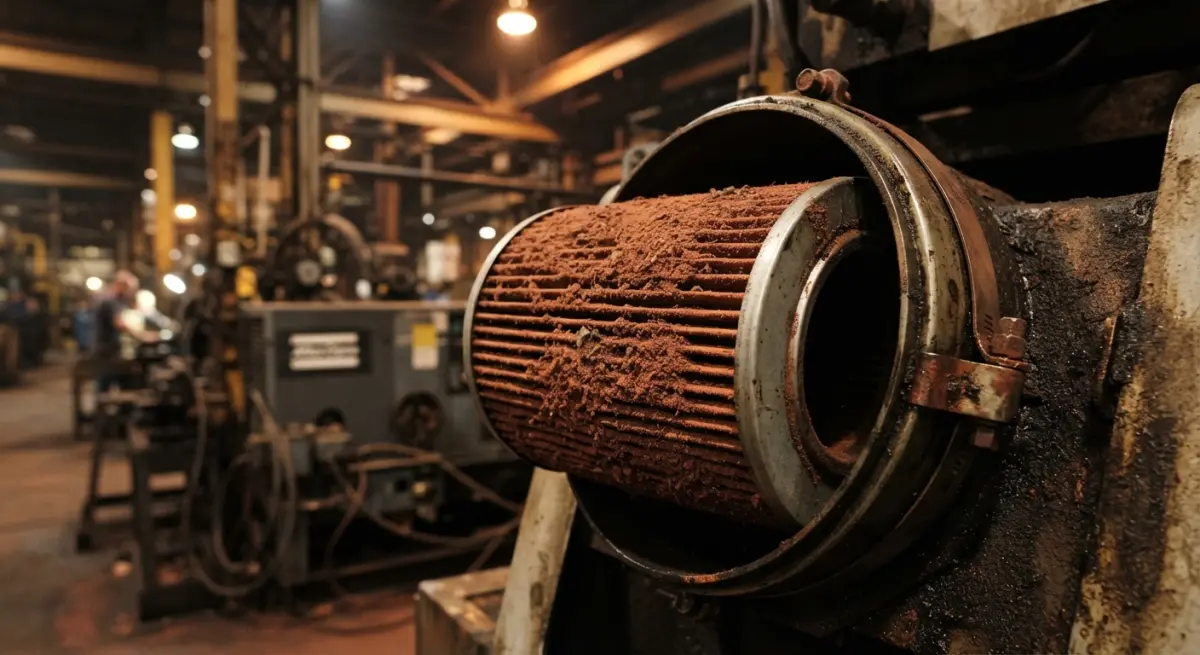
The geography and industrial landscape of southern districts present unique environmental challenges. In agricultural processing zones, textile hubs, and coastal industrial zones utilizing air compressors in Ramanathapuram or Sivaganga, ambient air often carries high concentrations of fine dust, cotton lint, or salt-laden particulates. During dry summer afternoons, wind patterns whip these micro-particles into industrial compounds.
When sucked into the compressor enclosure, dust and lint coat the face of the cooler matrix like a heavy felt blanket. This particulate buildup blocks airflow through the cooler cooling fins. Even a thin layer of dust significantly reduces heat dissipation, forcing the cooling fan to work harder against elevated backpressure. When dirty coolers are combined with clogged intake air filters, the compressor must draw deeper vacuum pressure to ingest air, increasing internal mechanical strain and driving operating temperatures higher.
Moisture and Auxiliary Component Strain
High temperatures also exacerbate moisture handling problems. Warm air holds significantly more water vapor than cool air. When the compressor ingests hot, moisture-laden air and compresses it, water vapor condenses in extreme volumes down the line. While high operating temperatures prevent moisture from condensing inside the oil reservoir—a minor benefit—it places severe stress on downstream treatment equipment.
Downstream systems frequently struggle during this period because saturated air exiting an overheated compressor enters the dryer at temperatures well beyond standard ratings. Understanding why factories need a refrigerated air dryer tuned to handle elevated inlet temperatures is critical; if the compressor runs too hot, the dryer trips, leading to contaminated pneumatic lines and valve malfunctions across the factory floor.
Actionable Steps to Prevent Summer Overheating
Preventing summer thermal trips does not require replacing your entire machinery fleet. Implementing targeted maintenance habits and structural improvements will provide immediate relief:
- Establish Dedicated Hot-Air Ducting: Never allow the compressor cooling fan to exhaust directly into the utility room. Fabricate a sheet-metal exhaust duct with canvas vibration isolators leading directly out through the roof or an exterior wall. Ensure the exhaust duct has minimal bends and does not restrict the exhaust fan’s static pressure.
- Install Forced Mechanical Ventilation: Natural cross-ventilation is rarely enough during peak summer months. Install heavy-duty industrial axial intake fans at the lowest point on the cooler wall of the room and exhaust louvers near the ceiling to purge rising thermal plumes.
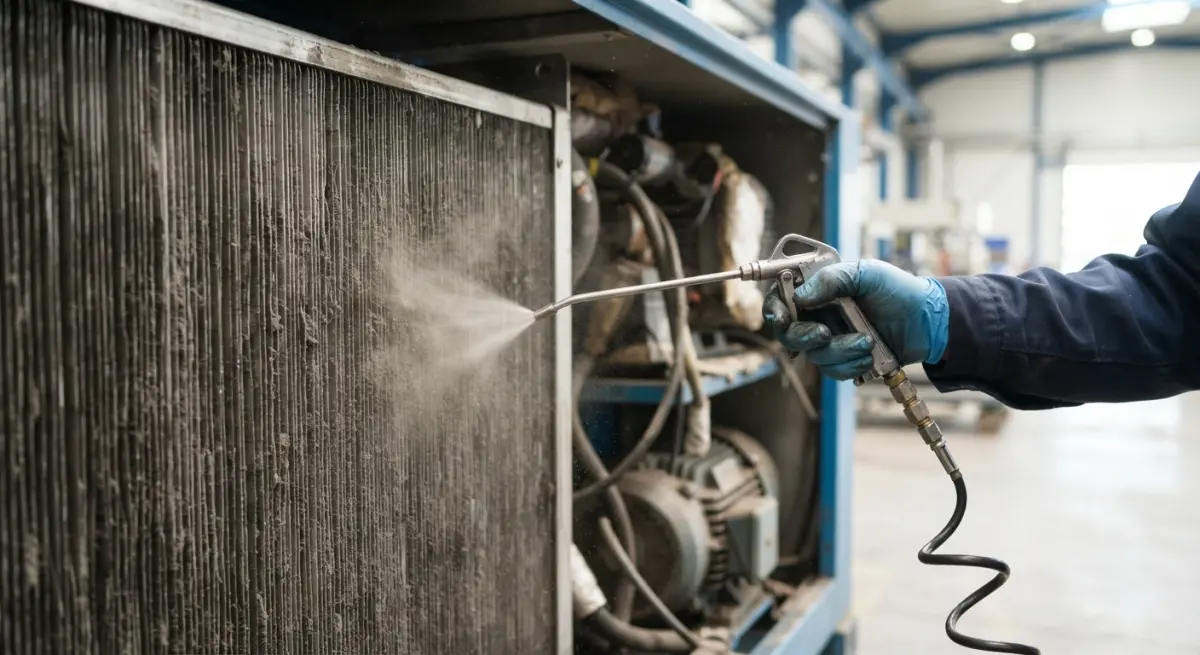
- Implement Bi-Weekly Cooler Matrix Cleaning: Make external cooler cleaning a standard procedure. Blow compressed air backwards through the cooler fins (opposite to the cooling fan’s airflow direction) to dislodge caked dust and lint. For stubborn grease or oily residue, use an approved non-corrosive fin cleaner.
- Switch to High-Grade Synthetic Lubricants: Mineral oils break down rapidly under sustained elevated temperatures. Upgrading to an engineered polyalphaolefin (PAO) or polyol ester (POE) synthetic lubricant ensures high thermal stability, resists varnish formation, and maintains lubricating film strength under intense summer run cycles.
- Check the Oil Thermal Mixing Valve: Verify that the internal thermostat elements open fully at the correct design temperature. Replace aging thermostatic elements during pre-summer preventive maintenance cycles to ensure maximum oil flow through the radiator.
Keep Your Production Running Year-Round
Summer heat in South Tamil Nadu is an unavoidable reality of the manufacturing calendar, but compressor downtime does not have to be. Overheating is rarely a flaw in the compressor itself; it is an engineering symptom of inadequate ventilation, restricted heat exchangers, or degraded lubrication circuits. By taking proactive measures before peak summer arrives, you protect your air end bearings, preserve downstream air quality, and avoid expensive assembly line halts.
Whether you require assistance retrofitting compressor room ventilation, descaling oil coolers, or establishing a seasonal maintenance protocol, having an experienced industrial partner makes all the difference. Contact our technical team today to request an air compressor quote or schedule a comprehensive summer health audit for your factory’s compressed air system.
Frequently Asked Questions
Why does high ambient temperature cause screw compressors to trip in South Tamil Nadu?
Summers in regions like Madurai and Thoothukudi regularly exceed 40°C, drastically reducing the heat transfer efficiency of standard air-cooled radiators. When the ambient temperature nears the compressor's thermal design limit, the system cannot dissipate heat fast enough, causing discharge temperatures to cross safety thresholds and trip the machine.
How often should screw compressor oil and filters be changed during Tamil Nadu's peak summer?
Due to relentless heat and localized industrial dust, standard 4,000-hour service intervals are insufficient for South Tamil Nadu summers. You should inspect oil coolers weekly, check synthetic lubricant viscosity every 1,000 hours, and replace degraded oil and air filters ahead of the summer peak to prevent thermal breakdown.
How does high humidity in coastal South Tamil Nadu affect screw compressor overheating?
High relative humidity in coastal hubs like Thoothukudi impairs evaporative cooling and increases moisture loading inside the compressor system. This excess moisture can emulsify the compressor oil, drastically degrading its lubricating and heat-absorbing capabilities and leading to severe internal overheating.
What ventilation setup stops screw compressor rooms from overheating in Madurai and Tirunelveli factories?
Compressor rooms require dedicated ducting to vent hot exhaust air directly outside the facility rather than letting it recirculate indoors. Installing forced-draft louvers with high-CFM exhaust fans creates negative pressure that continuously draws in cooler, filtered ambient air across the compressor's cooling package.
Should manufacturing plants in South Tamil Nadu switch to water-cooled screw compressors to avoid summer shutdowns?
If ambient factory temperatures consistently exceed 45°C or air circulation is physically restricted, retrofitting to a water-cooled system with an external cooling tower is highly effective. Water-cooled units provide stable thermal regulation independent of hot ambient air, eliminating heat-related trips during peak summer months.
Also read: Selecting the Right Screw Compressor Setup for CNC Machining and Metal Fabrication Workshops