
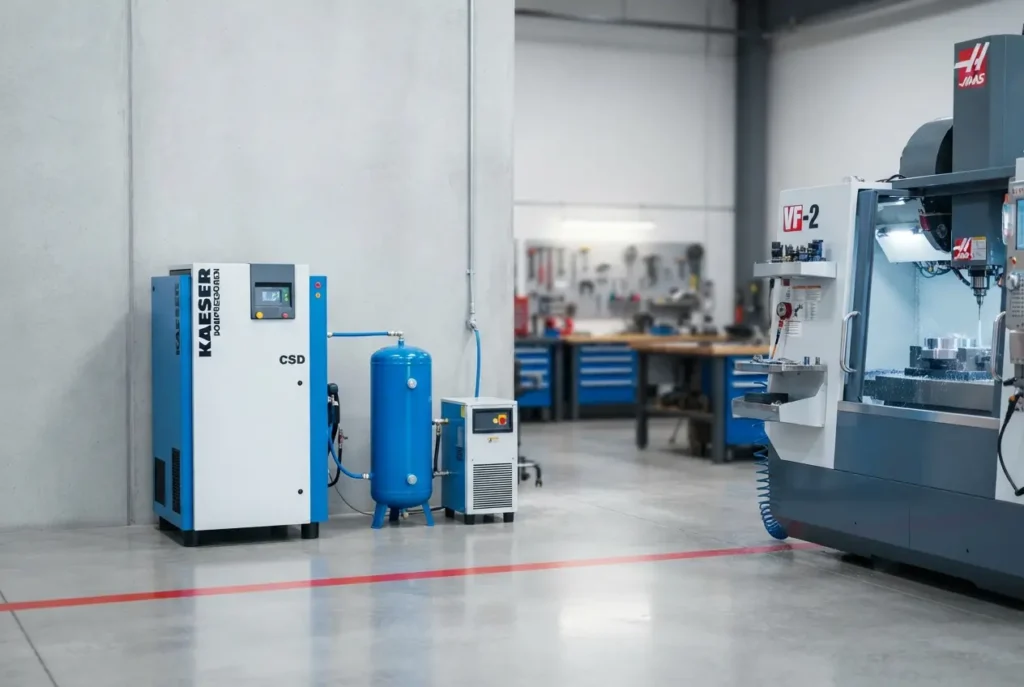
Modern CNC machining centers and metal fabrication facilities rely on compressed air as a primary utility, operating alongside electricity to power precision work. From pneumatic tool changers and spindle purges to laser-assist gases and pneumatic clamping systems, a steady supply of clean, pressurized air is non-negotiable. When air pressure fluctuates or moisture enters the line, the results can be disastrous: ruined workpieces, expensive spindle bearing replacements, and unexpected machine downtime.
For growing fabrication facilities, traditional piston compressors often reach their limits quickly. They run hot, struggle with continuous duty cycles, and generate unacceptable noise levels right on the shop floor. Upgrading to a rotary screw compressor is the standard step forward, but simply buying any unit off the shelf will not guarantee optimal performance. Setting up an efficient system requires understanding your specific air consumption patterns, air quality standards, and distribution layout.
Selecting the right screw compressor setup requires a balanced approach that covers everything from sizing the air-end to installing downstream treatment and distribution lines. By carefully evaluating each component, machine shop owners can eliminate pressure drops, safeguard sensitive CNC electronics, and maintain continuous production without costly interruptions.
Assessing CFM Demand and Operating Pressure
The first step in choosing a screw compressor setup is understanding the cumulative air demand of your workshop. CNC machines consume air intermittently—during automated tool changes, chip blast cycles, and door actuations—while also requiring a continuous, gentle stream of positive pressure to purge spindles and optical scales. Meanwhile, metal fabrication processes like plasma cutting, sandblasting, and deburring demand a sustained, high-volume supply.
To avoid under-sizing your system, you must determine your peak pneumatic demand rather than merely adding together average consumption numbers. Knowing how to calculate air compressor cfm for your factory allows you to identify baseline continuous demand alongside intermittent spikes. Additionally, operating pressure must be aligned with your most demanding tool. Most CNC centers require consistent delivery at around 6 to 7 bar. If your line pressure dips below this threshold during a cycle, the CNC machine’s internal pressure switch will trigger an emergency stop, potentially ruining both the cutting tool and the part on the table.
Choosing Between Fixed-Speed and Variable Speed Drive (VFD)
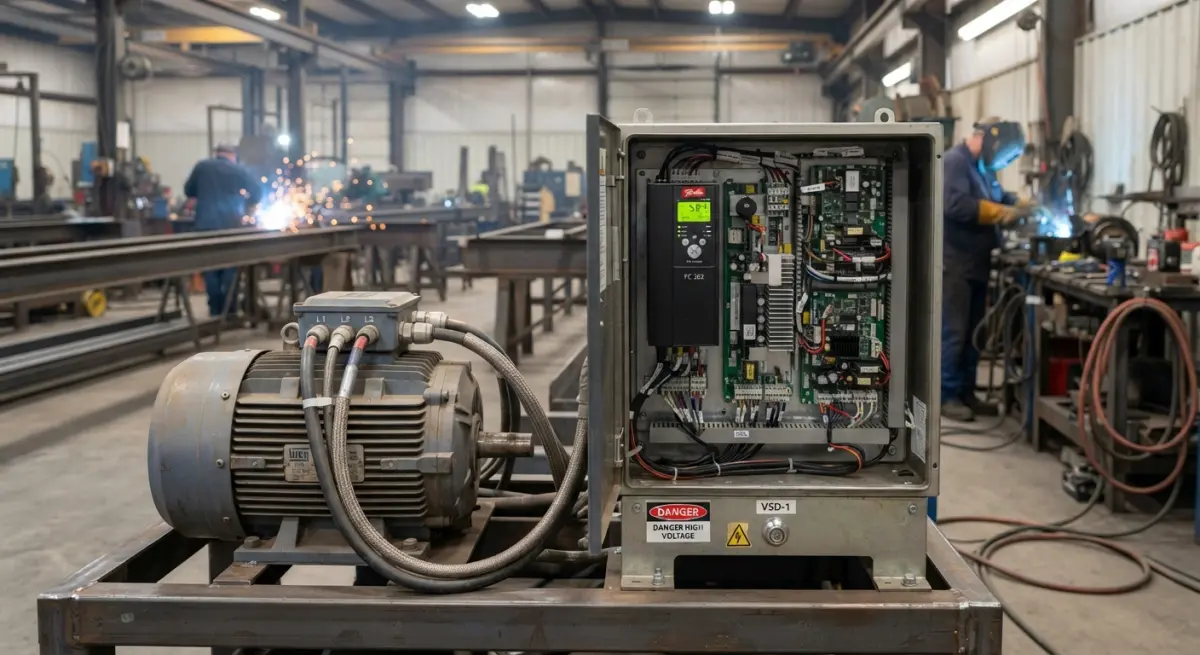
Once you understand your airflow requirements, the choice of drive mechanism becomes critical. In metal fabrication environments, workload fluctuations are common. A job shop might run four CNC vertical machining centers simultaneously on a Monday, then spend Tuesday cutting thick plate on a single fiber laser. Operating a standard compressor that runs at full capacity during low-demand periods wastes substantial electrical energy.
Evaluating a fixedspeed vs vfd air compressor which is right for your factory comes down to your operational profile. A fixed-speed rotary screw machine is ideal if your workshop maintains a steady, continuous load profile throughout the shift. However, if your demand fluctuates frequently based on batch sizes and differing machine setups, a Variable Frequency Drive (VFD) compressor regulates motor speed to match actual real-time air consumption. This precise throttling stabilizes system pressure, protecting sensitive tool changers from sudden pressure sags while curtailing power costs.
Air Quality: Why Filtration and Drying Are Essential for CNCs

In metalworking, compressed air quality is just as important as volume. Atmospheric air contains ambient moisture, ambient dust, and aerosolized lubricants. When compressed, these contaminants concentrate significantly. If damp, oily air reaches a CNC spindle, it washes away precision grease, introduces rust to delicate pneumatic solenoids, and fogs optical encoders. In laser cutting setups, trace oil or water in the assist air will cloud the focus lens, resulting in poor edge quality or cracked optics.
Understanding why factories need a refrigerated air dryer is essential for protecting your investment. A refrigerated dryer cools incoming compressed air to condense and drain vapor before it enters the workshop network. Coupled with a multi-stage filtration setup—typically a particulate pre-filter followed by a sub-micron coalescing filter—your system can achieve the ISO 8573-1 air quality standards demanded by high-precision machine manufacturers.
Piping and Storage: Preserving Pressure and Flow
A reliable screw compressor setup does not end at the dryer discharge valve. How you transport air across the shop floor dictates whether your CNCs receive steady pressure. Using undersized or corrosive pipe materials can sabotage even the most premium rotary screw compressor. Over time, traditional black iron or galvanized steel pipe corrodes internally, creating rough surfaces that cause frictional pressure drops and shedding scale directly into downstream equipment.
When engineering your distribution loop, reviewing aluminum vs gi piping for industrial compressed air pressure drop and lifetime cost comparison will highlight the advantages of modern smooth-bore modular piping. Aluminum pipe keeps air lines free of rust and minimizes flow resistance across expansive workshops. Furthermore, incorporating a properly sized vertical air receiver tank acts as an energy buffer, dampening the sudden draws created by heavy pneumatic clamps or air blast systems without stalling machine cycles.
Practical Tips for Workshop Compressor Installation
- Establish a Ring Main Distribution Loop: Instead of running a single dead-end trunk line down your workshop, route piping in a continuous closed loop. A ring main balances air delivery from multiple directions, ensuring that a tool-change burst at one end of the shop does not starve a finishing pass on the other.
- Use Top-Takeoff Drops: Always pull supply drops from the top of the main header using gooseneck curves rather than tapping from the bottom. This mechanical layout prevents residual condensation traveling along the pipe wall from falling straight into your CNC connection points.
- Plan for Adequate Ventilation: Screw compressors reject substantial heat during compression. Position your compressor in a well-ventilated utility room or dedicated mechanical alcove with ducting to eject hot exhaust air outdoors, ensuring the unit runs within safe operating temperatures.
- Install Point-of-Use Regulators and Drains: Even with a primary dryer and central tank auto-drain, equip each CNC inlet with a dedicated filter-regulator unit with an automatic bowl drain as an extra line of defense against trace contamination.
Conclusion
Selecting the right screw compressor setup for a CNC machining and metal fabrication workshop involves more than picking a machine based on horsepower. It requires matching volume and pressure to real-world machining cycles, implementing rigorous moisture and oil filtration, and constructing an efficient, corrosion-resistant distribution network. When every element functions as a cohesive system, your tools run smoothly, spindle longevity is preserved, and your shop achieves reliable, continuous output. If you are planning an upgrade or building out a new workshop floor, request an air compressor quote to design an engineered system tailored to your production demands.
Frequently Asked Questions
What size rotary screw compressor is needed to run a CNC machine?
Most single CNC machines require between 10 to 30 CFM at 90 to 120 PSI, depending on tool changer demands and whether air blast or minimum quantity lubrication (MQL) is used continuously. For a typical small-to-medium machine shop, a 10 HP to 15 HP rotary screw compressor provides the continuous volume needed to prevent machine faults without overpaying for unused capacity. It is critical to calculate the combined peak CFM of all spindle purges, tool changers, and secondary fabrication equipment before selecting a horsepower rating.
Why is a rotary screw compressor better than a piston compressor for metal fabrication?
Rotary screw compressors operate at a 100% continuous duty cycle, delivering smooth, non-pulsing airflow essential for delicate processes like fiber laser cutting, plasma cutting, and CNC pneumatic clamping. Piston compressors are only rated for 50-70% duty cycles and produce excessive heat, vibrations, and high oil carryover that can ruin expensive optical lenses and machine electronics. Additionally, the whisper-quiet operation of screw compressors allows them to be placed directly on the shop floor near the equipment.
Should CNC and metal fabrication shops choose a fixed-speed or VFD screw compressor?
If your fabrication shop experiences fluctuating air demand due to intermittent plasma cutting, grinding, and automated CNC cycles, a Variable Frequency Drive (VFD) compressor is the best choice because it ramps motor speed up or down to match real-time consumption, reducing energy costs by up to 35%. However, if your shop runs high-production shifts where multiple CNC machines create a steady, non-stop air demand near maximum capacity, a standard fixed-speed screw compressor offers lower upfront costs and simpler maintenance. A compressed air audit can definitively show whether your load profile justifies the higher initial investment of a VFD unit.
What air filtration and drying system is required for fiber laser cutting and CNC machining?
CNC operations require at least an ISO 8573-1 Class 4 rating for moisture, typically achieved using a refrigerated air dryer that cools the air to a 38°F pressure dew point alongside a dual-stage coalescing filter system. For fiber laser cutting using compressed air as an assist gas, the requirements are far stricter (ISO Class 1:2:1 or better), demanding a desiccant dryer with a -40°F dew point and multi-stage oil vapor removal to prevent lens contamination and edge oxidation. Neglecting this air treatment train will lead to premature tool wear, machine downtime, and rejected workpieces.
How large should the air receiver tank be for a metal fabrication screw compressor?
A standard rule of thumb for rotary screw compressors is 3 to 5 gallons of receiver tank storage per CFM of compressor output. In metal fabrication environments with high-spike, intermittent demands—such as pneumatic clamping, blast cabinets, or automated sheet loaders—sizing up to 5 to 10 gallons per CFM prevents sudden pressure drops that trigger CNC low-pressure safety alarms. Installing the wet receiver tank upstream of your air dryer also acts as a primary heat exchanger and bulk moisture separator, optimizing downstream air quality.