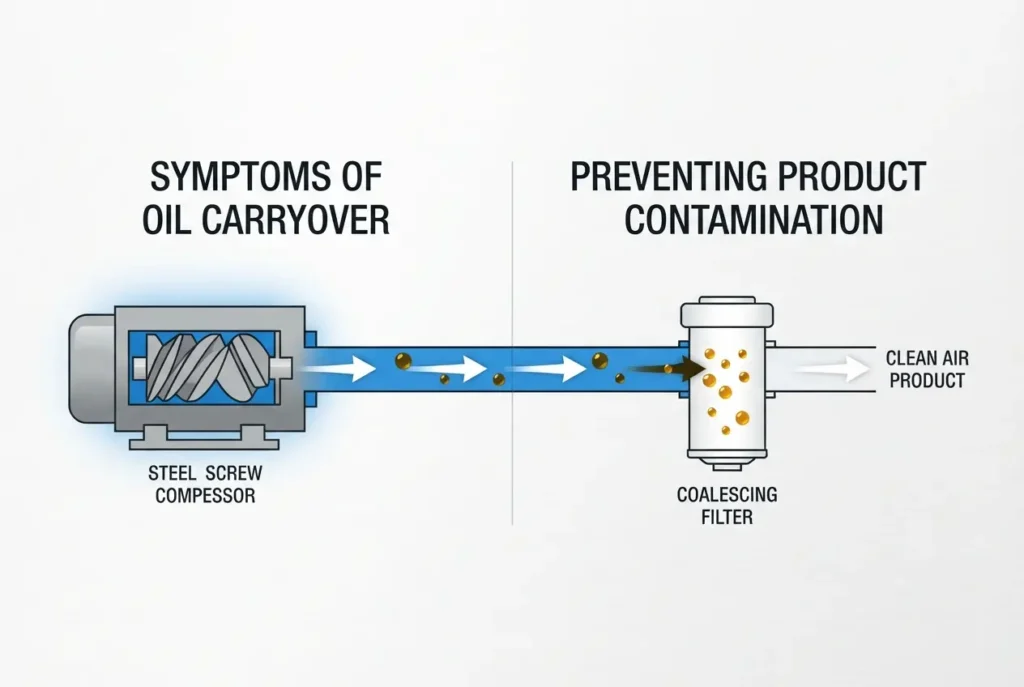
Rotary screw air compressors are the workhorses of modern manufacturing, powering everything from pneumatic automation to critical packaging lines. In oil-injected screw compressors, lubricating fluid serves vital functions: cooling the compression elements, sealing internal clearances, and lubricating moving bearings. However, that lubricant must remain inside the compressor circuit. When lubricating fluid escapes into the plant’s distribution network, facilities face a frustrating and expensive challenge known as oil carryover.
Oil carryover refers to the unintended migration of compressor lubricant past the internal oil separation system and into downstream piping. Even a faint mist can ruin sensitive electronics, foul delicate instrumentation, spoil finished goods, or cause costly production shutdowns. In high-purity sectors like food packaging, pharmaceutical processing, or precision painting, downstream oil contamination can result in entire production batches being rejected.
Recognizing the early warning signs of excessive oil discharge enables plant engineers and maintenance teams to intervene before clean compressed air lines become coated with sticky, acidic varnish. Understanding how oil carryover happens, what symptoms indicate an active issue, and how to remediate the root causes is fundamental to keeping industrial operations reliable, clean, and compliant.
Recognizing the Symptoms of Oil Carryover in Plant Operations
In most industrial environments, oil carryover reveals itself gradually before escalating into a visible crisis. Paying close attention to routine operating indicators across your compressor room and distribution system can help you detect escaping oil before it ruins end products.
- Unexplained Oil Level Drops: The clearest indicator is frequent fluid top-ups. If a screw compressor requires top-up oil well ahead of scheduled service intervals without any external puddles or leaking fittings, that oil is traveling directly into the compressed air supply.
- Discolored Condensate Discharge: Moisture drains on air receivers, refrigerated dryers, and line drop legs should primarily release clear water. When automatic drain valves discharge milky, opaque, or yellowish liquid, oil is actively emulsifying with moisture throughout the air system.
- Pneumatic Valve and Cylinder Sluggishness: Downstream solenoid valves, cylinders, and air motors depend on clean air or specialized internal greases. Heavy hydrocarbon mist washes away factory grease and attracts ambient airborne debris, resulting in sticky, sluggish, or erratic valve actuation.
- Oily Odors or Visible Haze at Exhausts: When compressed air exhausts through point-of-use silencers, hand tools, or blow-off nozzles, an unmistakable burning oil scent or fine airborne haze indicates severe separator bypass.
- Surface Imperfections in Finishing Processes: Facilities using compressed air for powder coating, automotive spraying, or metal finishing often notice pinholes, “fisheyes,” or blistering on painted surfaces when oil aerosols compromise finish adhesion.
Root Causes of Oil Carryover in Rotary Screw Compressors
Compressor lubricants do not migrate into downstream headers by accident; specific mechanical or operational faults disrupt the fluid management cycle. Identifying the exact mechanism is essential for choosing the proper remedy.
1. Air-Oil Separator Failure or Saturation
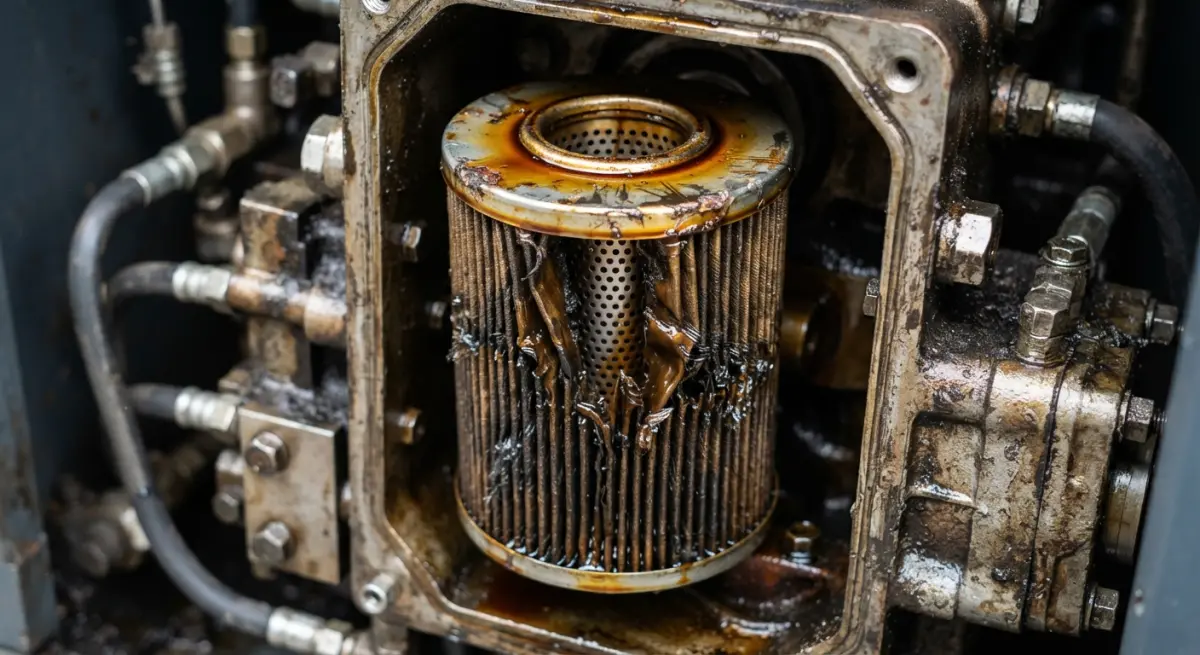
The primary barrier keeping lubricant inside the machine is the air-oil separator element. Over time, as it captures microscopic oil droplets, its media can become clogged with fine particulate matter, causing a high differential pressure across the cartridge. If neglected, the filter media may collapse or tear, allowing pressurized air to blow fluid straight into the discharge line. In other cases, faulty sealing gaskets allow oil to slip around the separator cartridge entirely.
2. Clogged or Malfunctioning Scavenge Line
Separated fluid pools at the bottom of the separator housing, where a small vacuum line—known as the scavenge line—draws it back into the airend intake. The scavenge line incorporates an orifice and an internal check valve. If the pickup tube is improperly positioned, or if carbon buildup clogs the restrictive orifice, collected oil cannot return to the injection circuit. The fluid level rises inside the separator vessel until high-velocity air carries liquid oil directly out of the discharge port.
3. Elevated Operating Temperatures
When compressors run hotter than their intended thermal band, lubricating fluid thins and its vapor pressure rises. This accelerates oil vaporization, generating fine aerosols that are dramatically harder for mechanical separator media to capture. In extreme climates or poorly ventilated compressor rooms, sustained heat quickly overwhelms standard oil separation equipment. Understanding why screw compressors overheat in south tamil nadu summers and how to fix it is vital for preventing seasonal spikes in downstream oil mist.
4. Sump Overfilling and Improper Fluid Viscosity
More oil is not better. Overfilling the oil reservoir reduces the expansion space inside the separator tank, exposing the separator element to direct liquid splashes rather than air-oil mist. Furthermore, using lubricating oils with incorrect viscosity grades or failing to match base stocks can lead to severe foaming. Foam easily travels through separation elements that are designed purely to coalesce liquid droplets.
Preventing Product Contamination Across Downstream Systems
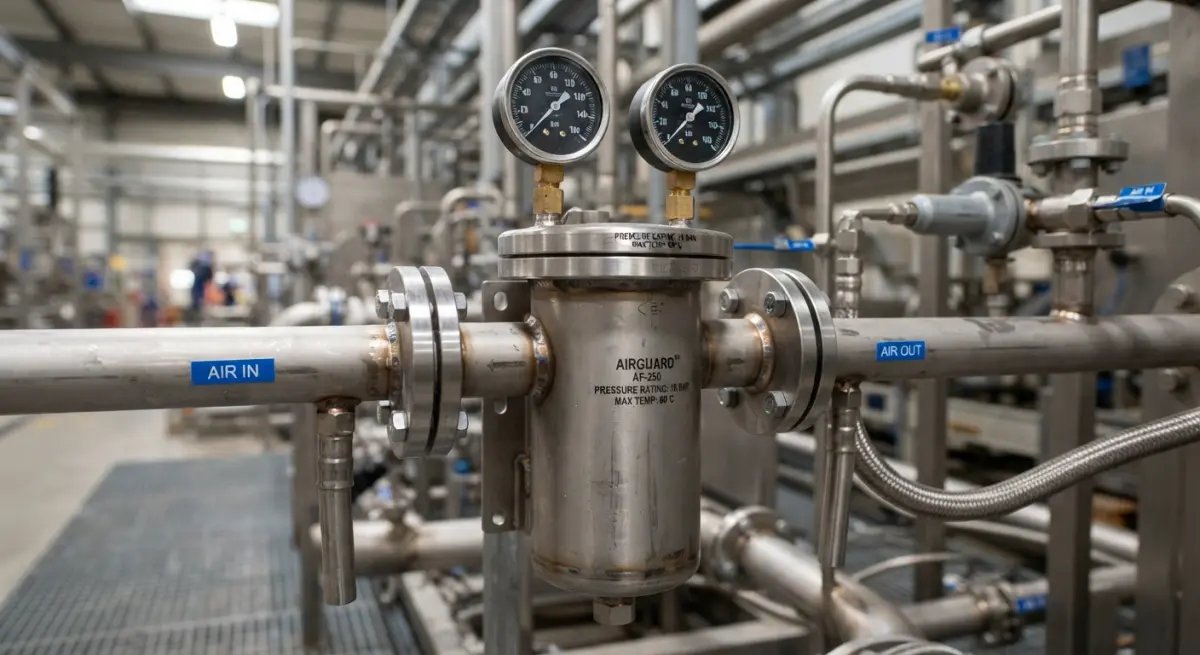
Preventing cross-contamination requires both keeping the compressor running within its design parameters and building an effective downstream purification chain. Industrial facilities should establish a layered defense strategy.
First, maintain strict alignment with international cleanliness benchmarks. For operations dealing with sensitive materials, reviewing compressed air iso 85731 quality standards for food processing and packaging plants will help establish measurable oil aerosol and vapor limits for your facility’s specific processes.
Second, install a robust downstream filtration train. While the internal separator does the heavy lifting, secondary filtration catches traces of oil that bypass the machine during transient load shifts. Selecting appropriate line filters is critical; consulting a guide on coalescing vs particulate downstream line filters selection and replacement intervals explained ensures you position deep-bed coalescing filters and activated carbon vapor towers exactly where they can safeguard your pneumatic processes.
Practical Maintenance Checklist to Eliminate Carryover
Implementing targeted operational routines can stop carryover before it damages your plant infrastructure or contaminates sensitive goods:
- Inspect the Scavenge Sight Glass Weekly: If your machine includes a sight glass on the scavenge return line, observe it while the compressor is running under load. You should see a steady movement of fluid or vapor. A completely clear sight glass or one completely flooded without flow points to an obstructed orifice or faulty check valve.
- Monitor Separator Differential Pressure: Track pressure drops across the separator element daily. Replace the element promptly when the differential pressure approaches manufacturer thresholds, or during scheduled annual overhauls, whichever comes first.
- Check Oil Levels Only After Settling: Check reservoir oil sight glasses immediately after shutdown or following prescribed resting intervals. Never top up oil while the unit is actively running or unloaded, as foaming and pressure fluctuations will yield deceptive level readings that encourage overfilling.
- Verify Automatic Drain Operation: Ensure condensate drains beneath receiver vessels and moisture separators are expelling fluids reliably. A blocked auto-drain forces liquid condensate and oil sludge back into the process air stream.
- Audit Discharge Temperatures: Keep operating temperatures within the optimal window recommended by your manufacturer—typically warm enough to prevent water condensation inside the sump, but cool enough to prevent oil thermal degradation and excessive vapor formation.
Protect Your Production Lines with Expert Compressed Air Support
Oil carryover is rarely an isolated problem; it is an operational warning that thermal controls, fluid conditions, or separation components need professional care. Left unaddressed, escaping lubricant degrades air distribution networks, clogs delicate valves, and risks catastrophic product contamination across your facility.
Whether you need to upgrade downstream purification filters, replace aging air-oil separators, or diagnose mystery fluid loss in your plant, dedicated compressed air technicians can restore your system’s efficiency and air purity. If you are experiencing persistent oil migration or plan to overhaul your treatment equipment, connect with the engineering team at sk air solutions today to secure clean, reliable, and contaminant-free compressed air for your entire facility.
Frequently Asked Questions
What are the most common visible symptoms of oil carryover in a rotary screw compressor?
The most common symptoms include milky or oily condensate draining from moisture traps, oil puddles accumulating near exhaust ports or downstream equipment, and an unusually rapid drop in the compressor's oil reservoir levels. Additionally, pneumatic tools and downstream air filters may become clogged or fouled with yellow or brown sludge.
How does a faulty minimum pressure valve (MPV) cause compressor oil carryover?
The minimum pressure valve maintains the internal pressure required to force oil through the system and ensure the air-oil separator functions correctly. If the MPV fails open or operates below design pressure, the high-velocity air rushes through the separator too quickly, stripping the oil and carrying it directly into the discharge lines.
Why does an overfilled oil sump increase the risk of air line contamination?
When the oil sump is overfilled, the lubricant level reaches too close to the separator element, submerging it or overwhelming it with excess foaming during operation. This prevents the element from effectively coalescing oil aerosols, leading to liquid oil being drawn directly into the downstream compressed air network.
How often should you replace the air-oil separator to prevent oil carryover?
In standard operating conditions, air-oil separator elements should be replaced every 4,000 to 8,000 hours, or annually, depending on the manufacturer's recommendations. However, you should change it immediately if the differential pressure gauge exceeds 8 to 10 psi, as a ruptured or overloaded element is the primary cause of sudden oil carryover.
What downstream filtration is required to prevent product contamination from oil carryover?
To protect sensitive production processes from oil contamination, install a multi-stage filtration setup consisting of a particulate pre-filter, a high-efficiency coalescing filter (down to 0.01 micron), and an activated carbon adsorber for oil vapors. For strict hygiene environments like food and pharmaceutical manufacturing, pairing this setup with oil-free air audits ensures ISO 8573-1 Class 1 or Class 0 air quality.