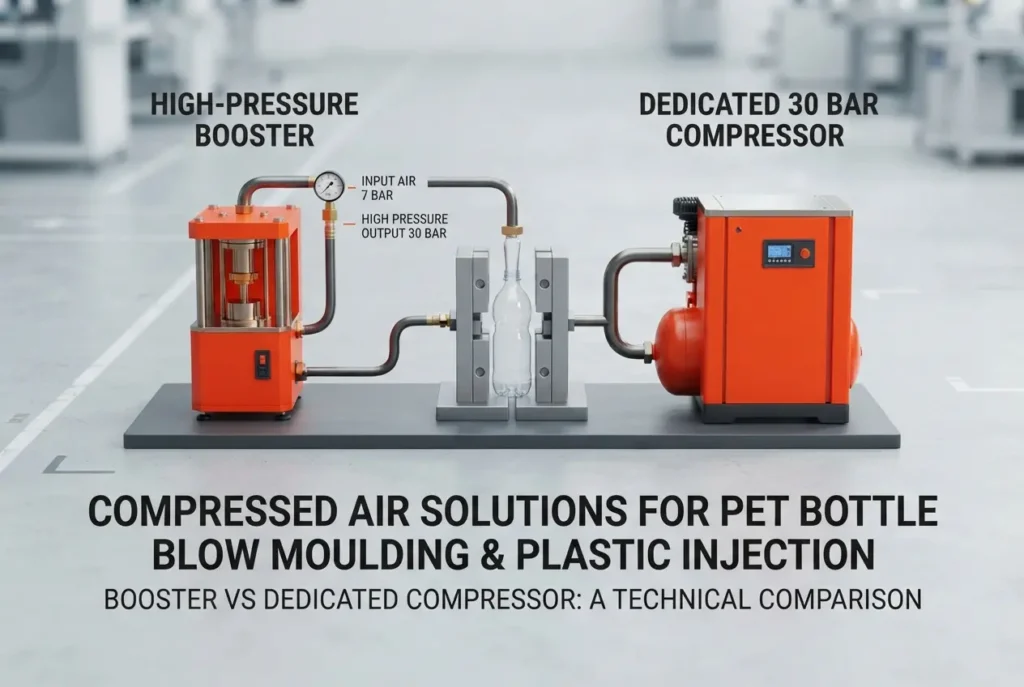
If you run a PET bottle blow moulding line, you already know that the air feeding your blowing stations is a different animal from the air running your general plant. Blow moulding typically needs around 30 to 40 bar for the final blow, while the rest of the factory is perfectly happy at 7 to 8 bar. That gap raises a practical question every plant manager eventually faces: do you boost your existing low-pressure air up to 30 bar, or do you install a dedicated 30 bar compressor?
The answer depends on your flow demand, your plant layout, your uptime expectations and, above all, how you want to spend money over the next decade. Plastic injection units add another wrinkle, since they use air for ejection, mould blow-off, and automation at much lower pressures. In this post, we will compare both approaches in plain terms so you can make a sound decision.
How PET Blow Moulding Uses High-Pressure Air
In a stretch blow moulding machine, a heated preform is stretched by a rod and then blown into the mould using high-pressure air. A lower-pressure pre-blow typically comes first, followed by the high-pressure final blow that forms the bottle’s shape and detail. Much of that high-pressure air is exhausted after each cycle, and many plants recover part of it to feed the pre-blow stage or the plant’s low-pressure network.
Because the demand arrives in sharp bursts with each blow cycle, the air system needs storage and a stable supply. Quality matters just as much as pressure. Oil, water, or particulates in blow air end up inside food and beverage containers, so air purity is part of the product specification. If you supply food-grade packaging, it helps to understand compressed air ISO 8573-1 quality standards for food processing and packaging plants before you finalise any equipment.
Option 1: High-Pressure Booster Compressor
A booster takes air from your existing 7 to 10 bar screw compressor and raises it to the required high pressure. It is usually a reciprocating unit with multiple stages and intercooling.
Advantages:
- Lower upfront cost, since you are not buying a full-capacity high-pressure machine.
- Efficient for plants where only a small portion of total air demand is at high pressure.
- Your existing screw compressor and dryer do the heavy lifting, so air is already treated before boosting.
- Smaller footprint and simpler installation in many cases.
Limitations:
- It depends entirely on the upstream compressor. If the low-pressure system trips, the booster stops too.
- Reciprocating boosters need regular attention to valves, rings and cooling.
- Any oil carryover from the upstream machine can be concentrated by the boost stages, so filtration matters.
Option 2: Dedicated 30 Bar Compressor
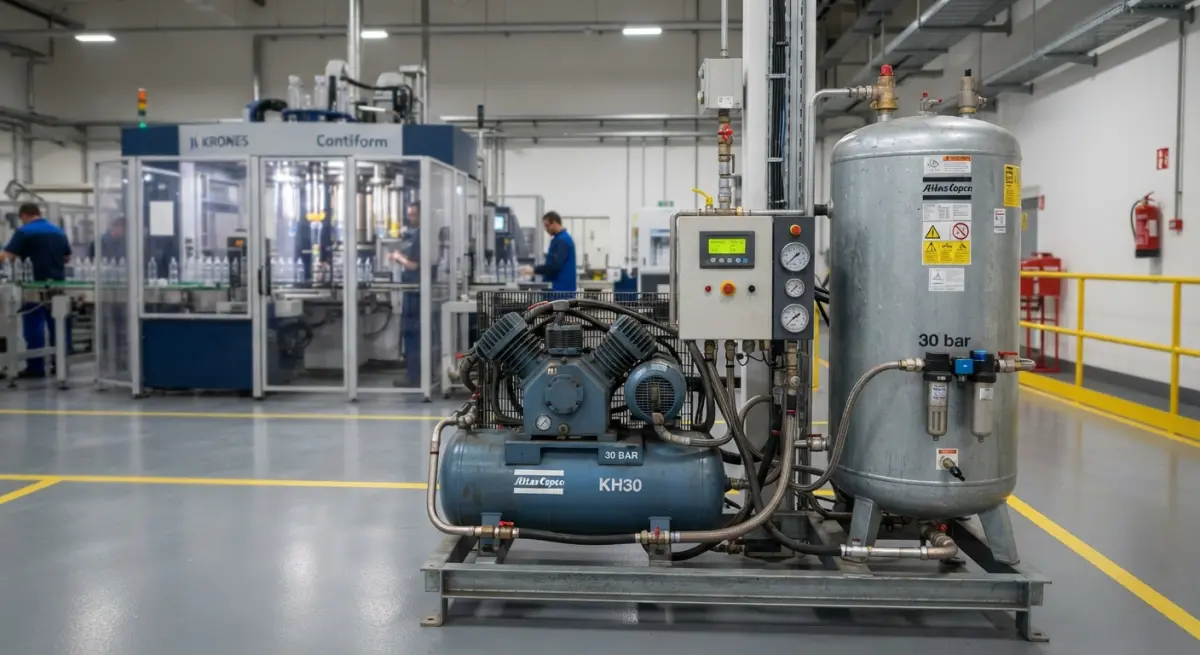
A dedicated high-pressure compressor is a standalone machine built to deliver air at 30 bar or higher from atmospheric intake. It does not rely on your plant network, which gives you independence and predictable performance.
Advantages:
- Independent of the low-pressure system, so a fault upstream does not stop your blowing line.
- Better suited to plants where most or all of the air demand is high pressure.
- Cleaner control over the full compression chain, including cooling and drying.
Limitations:
- Higher purchase price and often higher maintenance complexity.
- If your plant already has spare low-pressure capacity, you may be duplicating compression work.
Comparing Energy and Ownership Cost
Purchase price is only the beginning. Over the life of a compressor, electricity dominates the bill, which is why the air compressor total cost of ownership over 10 years why energy is 70 of the bill and purchase price is only a small part deserves a close read before you sign any purchase order.
A booster generally wins on energy when the high-pressure share of demand is small, because the bulk of your air is compressed only to 7 or 8 bar. A dedicated unit makes more sense when high-pressure air is the main load, since compressing everything to a low pressure first and then boosting adds stages that you may not need. Also remember that running the whole plant at a higher header pressure to suit one machine is expensive, a point covered in why operating above 7 bar wastes power sizing header pressure to match tool requirements.
Where Plastic Injection Units Fit In
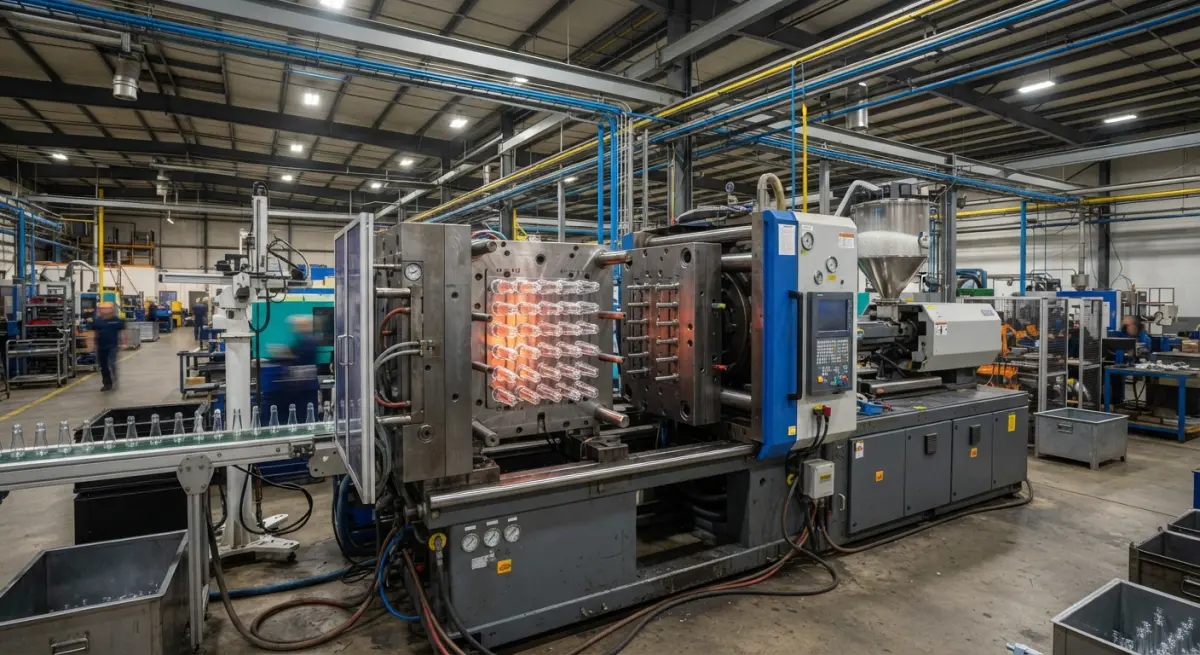
Injection moulding machines are mostly hydraulic or electric, but they still use compressed air for part ejection, core pulls, robot grippers and blow-off. These loads run at normal plant pressure, so they belong on your standard network. If your site runs both injection and blow moulding, a booster fed from the common header is often the most economical way to serve the single high-pressure line while injection machines use the shared supply.
Practical Tips for Making the Decision
- Measure first. Establish your actual flow before choosing. Our guide on how to calculate air compressor CFM for your factory is a good starting point.
- Treat the air properly. Hot, humid climates stress dryers, so review how to size a refrigerated air dryer for hot inlet air and South Tamil Nadu summer temperatures.
- Plan for backup. Blow moulding lines hate unplanned stops. Consider the redundancy logic in one large compressor or two smaller units comparing backup capacity and ownership cost.
- Check for leaks. High-pressure air is expensive, and leaks cost more at 30 bar than at 7. An ultrasonic compressed air leak audit in manufacturing plants pays for itself quickly.
A Simple Rule of Thumb
If high-pressure air makes up a modest part of your total demand and your low-pressure system has reliable capacity and good air quality, a booster is usually the sensible choice. If high-pressure demand is dominant, if you need full independence, or if your existing compressors are already stretched, a dedicated 30 bar machine earns its higher price. Either way, size the receivers properly and keep filtration and drainage in good order.
Conclusion
There is no universal winner between a high-pressure booster and a dedicated 30 bar compressor. The right choice comes from your real flow profile, your uptime needs and your energy cost over the long term. Making that call with data rather than assumptions saves money every month the line runs.
If you are planning a new blow moulding line or upgrading an existing one, the team at SK Air Solutions can help you size the system and compare options for your site. Request an air compressor quote today, or explore our air compressors and compressed-air products to see what is available.
Frequently Asked Questions
Is a high-pressure booster or a dedicated 30 bar compressor better for PET bottle blow moulding?
A booster is usually cheaper upfront and works well when the plant already has a 7-10 bar network with spare capacity, especially for small or medium blow moulding lines. A dedicated 30 bar compressor is better for high-volume, continuous production because it avoids the efficiency losses of compressing air twice and gives more stable pressure. The best choice depends on total high-pressure demand, duty cycle, and whether your low-pressure compressors can supply the extra flow.
How much energy can a dedicated 30 bar compressor save compared to a booster system?
A dedicated 30 bar compressor can use roughly 10-20% less energy per unit of high-pressure air than a booster fed by a 7-10 bar compressor in continuous operation. This depends on the load profile, the efficiency of the booster, and how well the low-pressure system is controlled. A lifecycle cost analysis including electricity, maintenance, and heat recovery is needed to confirm real savings.
What air quality is required for PET bottle blowing air at 30–40 bar?
Blowing air that contacts food and beverage containers should typically meet ISO 8573-1 Class 1 or 2 for oil and Class 2 for particles, with a pressure dew point low enough to prevent condensation. Oil-free compression or well-maintained oil-removal filtration, plus a dryer, is common practice. Many producers also follow BCAS or customer-specific hygiene standards, so confirm requirements before choosing the system.
Can one compressed air system supply both PET blow moulding and plastic injection moulding units?
Yes, but the two usually need different pressures: injection moulding machines typically run on 6-10 bar for ejection, valves, and automation, while PET blowing needs 25-40 bar. A common layout uses a main low-pressure compressor for the whole plant, with a booster or dedicated 30 bar compressor serving only the blow moulders. Separate receivers and good pressure control keep the injection units from being affected by blow-moulding demand spikes.
What size air receiver and piping do I need for a high-pressure PET blowing system?
High-pressure receivers are generally sized to buffer the intermittent, high-flow bursts of each blow cycle, often with a dedicated 30-40 bar vessel near the machines. Piping should be rated for the working pressure, use stainless steel or suitable materials, and be sized to limit pressure drop, ideally below 0.5 bar. Proper sizing reduces pressure fluctuations, protects bottle quality, and lets the compressor or booster run more efficiently.