
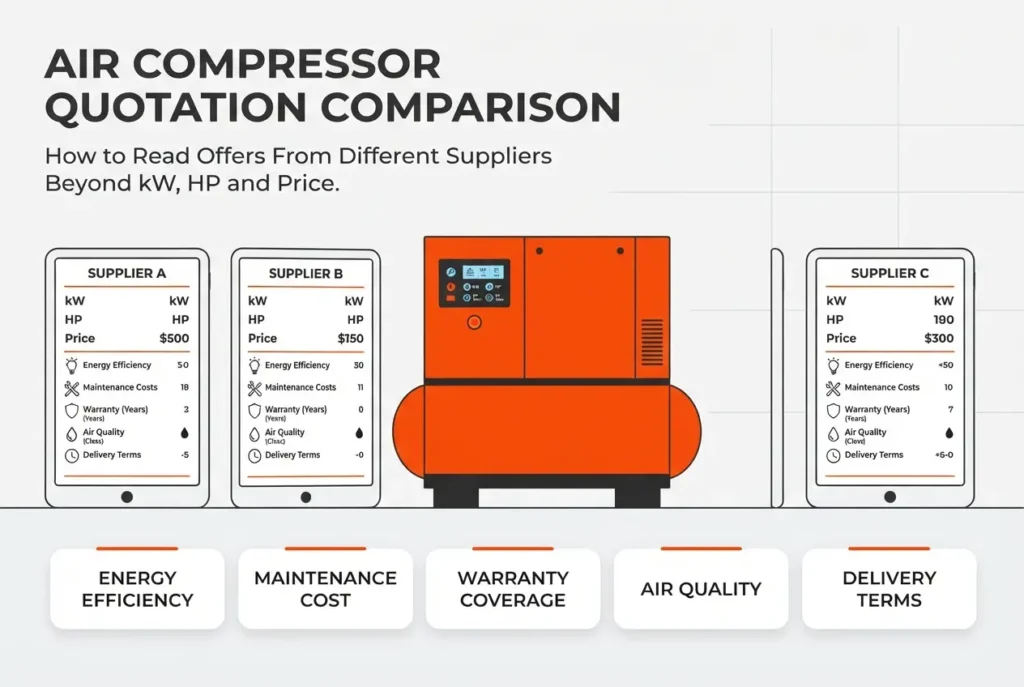
You have three quotations on your desk for a rotary screw compressor. All three say the same motor rating, and the prices differ by a noticeable margin. It is tempting to pick the cheapest and move on. But kW, HP and price describe the size of the motor and the size of the invoice. They say very little about how much air you will actually get, how much power it takes to make that air, or what the machine will cost you in year five.
This guide walks through the parts of a compressor quotation that decide real-world value. Use it as a checklist when you compare offers from different suppliers, so you are comparing like with like instead of one motor plate against another.
Start With Delivered Air, Not Motor Size
Two compressors with identical motors can deliver quite different volumes of air. The figure that matters is free air delivery (FAD), normally stated in CFM, m³/min or litres per second, at a stated working pressure. Check three things:
- Is FAD quoted at your working pressure? A figure given at a lower pressure looks better on paper but will not match what you get at your header.
- Is it measured to a recognised standard? Ask which test standard the figure follows, and whether it is a tested value or a catalogue estimate.
- Is it a range or a single number? A vague “up to” figure is a warning sign.
If you are not sure what your plant actually needs, work that out first. Our guide on how to calculate air compressor CFM for your factory is a good starting point, so you have your own number to hold each quotation against.
Look at Specific Power and Energy Use
Specific power is the power consumed per unit of air delivered. It is the most honest single indicator of efficiency, because it ties the motor size to the actual output. A supplier offering a slightly larger motor with a lower FAD is giving you worse efficiency, even if the headline kW looks reassuring.
Ask each supplier for specific power at your operating pressure, and ask whether it includes the fan motor and other auxiliaries or only the main drive. If you are replacing an old machine, it helps to know your current figure too; see how to measure compressor specific power before replacing an ageing machine.
This matters because energy is by far the largest cost over a compressor’s life, while the purchase price is a smaller share. We cover this in air compressor total cost of ownership over 10 years. A cheaper machine that is less efficient can easily cost more by the end of its first few years.
Check the Control Type and What It Does at Part Load
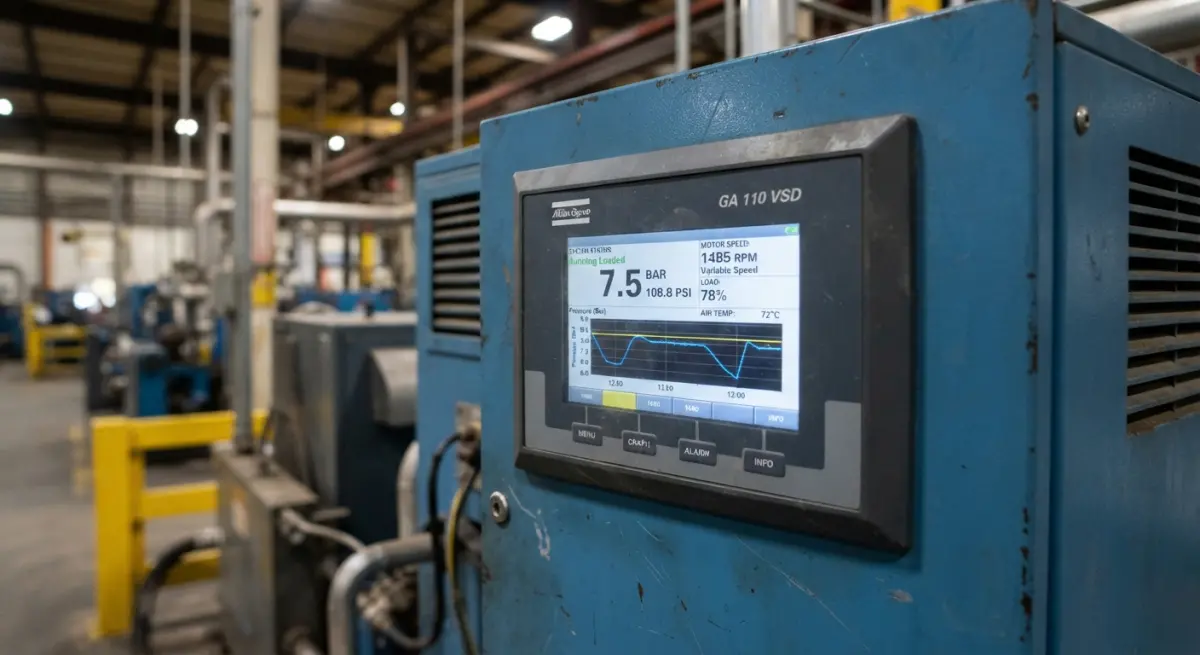
Few factories run at full load all day. How the compressor behaves when demand drops can change your power bill significantly. A fixed-speed machine that runs unloaded between demand peaks still consumes power while producing no air. A VFD machine adjusts motor speed to follow demand.
Make sure each quotation states the control method clearly, and that you are not comparing a VFD offer against a fixed-speed one without adjusting for that. If your demand varies, read fixed-speed vs VFD air compressor: which is right for your factory? before deciding. If you already run fixed-speed machines, how to measure and mitigate unloaded running hours shows what you may be losing.
Compare What Is Included in the Scope
This is where quotations most often look similar but are not. One supplier includes an air receiver, dryer, filters and installation. Another lists only the compressor and leaves you to discover the rest. Build a simple side-by-side list covering:
- Air receiver tank (size and whether it is included)
- Dryer type and capacity, plus line filters
- Condensate drains
- Starter type, cables and electrical protection
- Piping, commissioning and testing
- Initial oil fill and first filter set
A missing dryer is a good example. Without proper drying, moisture reaches your machines and causes sticky valves and product defects. Our explainer on why factories need a refrigerated air dryer shows why leaving it out only moves the cost to later. For electrical items, the air compressor installation electrical checklist helps you confirm nothing is overlooked.
Warranty, Service and Spares Support
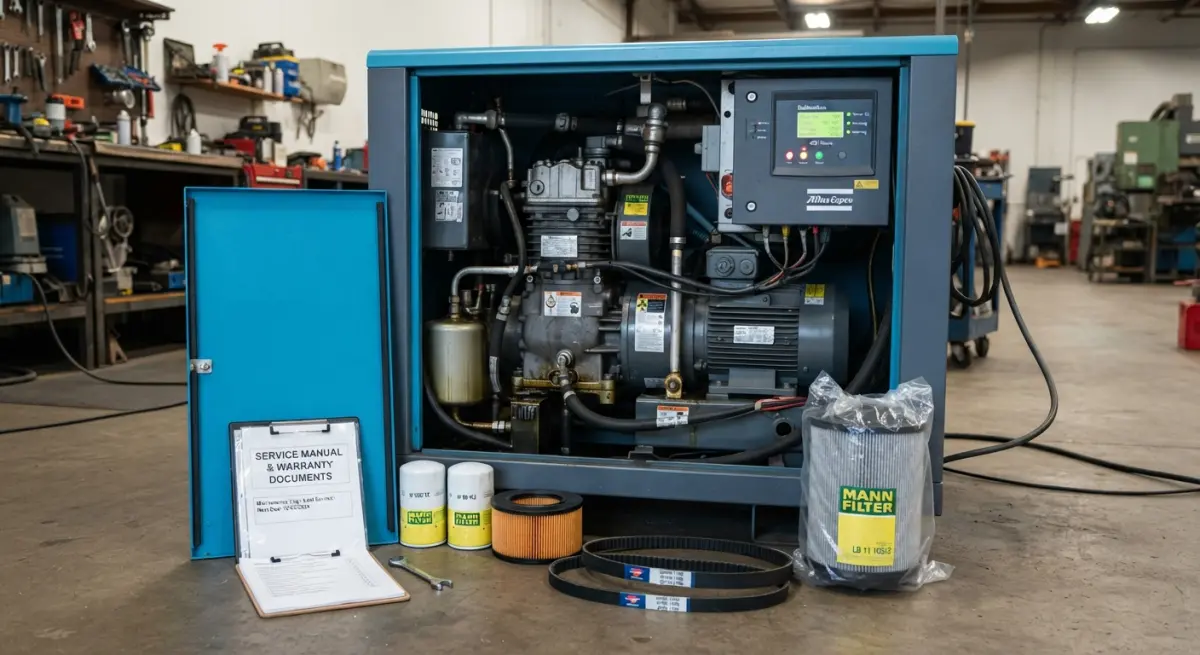
A warranty is only as good as the service behind it. Read the terms carefully: what is covered (airend, motor, controller), for how long, and what conditions apply, such as using approved oils and filters. Then ask practical questions:
- Where is the nearest service engineer, and what is the typical response time?
- Are consumables and spares stocked locally?
- Is a maintenance contract offered, and what does it cover? See what a good AMC covers and what it should cost.
For a factory where downtime halts production, local support can be worth more than a modest saving on the price. It is the reason many buyers in the region prefer a supplier with a nearby presence, such as those serving air compressors in Madurai.
Practical Tips for Comparing Quotations
- Make a comparison table. List FAD, pressure, specific power, control type, cooling, included accessories, warranty and service terms for every offer.
- Ask for the same basis. Request that all suppliers quote at your working pressure and ambient temperature. Hot conditions affect cooling and performance, as discussed in why screw compressors overheat in South Tamil Nadu summers.
- Estimate running cost yourself. Multiply specific power by your annual air demand and local tariff. Even a rough calculation highlights differences that the price hides.
- Consider redundancy. Sometimes two smaller units are a better choice than one large one; see one large compressor or two smaller units.
- Be careful with used machines. A low price may carry hidden risks, covered in used or reconditioned vs new VAYU screw compressor.
Conclusion
The best quotation is rarely the cheapest or the one with the biggest motor. It is the one that delivers the air you need, at the lowest energy cost, with the right accessories and dependable local support. Compare delivered air, specific power, control type, scope and service, and the price starts to make sense in context.
If you would like help reading the offers you have received, or want a clear, like-for-like proposal, the team at SK Air Solutions is happy to review your requirements. You can request an air compressor quote and we will walk you through every line, so you can decide with confidence.
Frequently Asked Questions
Why is FAD (free air delivery) more important than kW or HP when comparing air compressor quotes?
FAD tells you how much air the compressor actually delivers at the stated working pressure, while kW and HP only describe the motor input. Two 37 kW compressors can differ by 10-15% in real output depending on airend efficiency and test standard. Always check that FAD is measured under ISO 1217 Annex C (or equivalent) and at the same bar pressure across all quotes.
What is specific energy consumption (kW/m³/min) and how do I use it to compare compressor offers?
Specific power is the energy needed to produce a unit of air, usually expressed in kW per m³/min of FAD at full load. A lower value means lower electricity costs, which typically account for 70-80% of a compressor's lifetime cost. Compare this figure across suppliers at the same pressure to see which machine is truly more efficient, even if its purchase price is higher.
What hidden costs and exclusions should I look for in an air compressor quotation?
Check whether the quote includes the air dryer, filters, receiver tank, condensate drains, piping, installation, commissioning, and freight, since suppliers often leave these out to show a lower price. Also confirm the scope of the warranty, the consumables included in the first service, and any extra charges for training or startup. Putting every quote into the same itemized scope sheet makes the real price differences obvious.
How do I compare maintenance, spare parts and warranty terms between compressor suppliers?
Ask for the service interval, a priced list of service kits (oil, filters, separators), and the expected parts lead time for each model. Compare warranty length on the airend versus the full package, and check whether genuine parts and certified service technicians are required to keep it valid. A cheap compressor with expensive proprietary parts or poor local support can cost far more over five years.
How can I calculate the total cost of ownership when comparing air compressor quotes?
Add the purchase and installation cost to the estimated energy, maintenance, and downtime costs over 5-10 years. Energy cost is calculated from specific power, annual running hours, load profile, and your electricity tariff. Using the same assumptions for every supplier shows which offer is actually cheapest over its life, often favoring a more efficient variable speed drive (VSD) model if your demand fluctuates.