
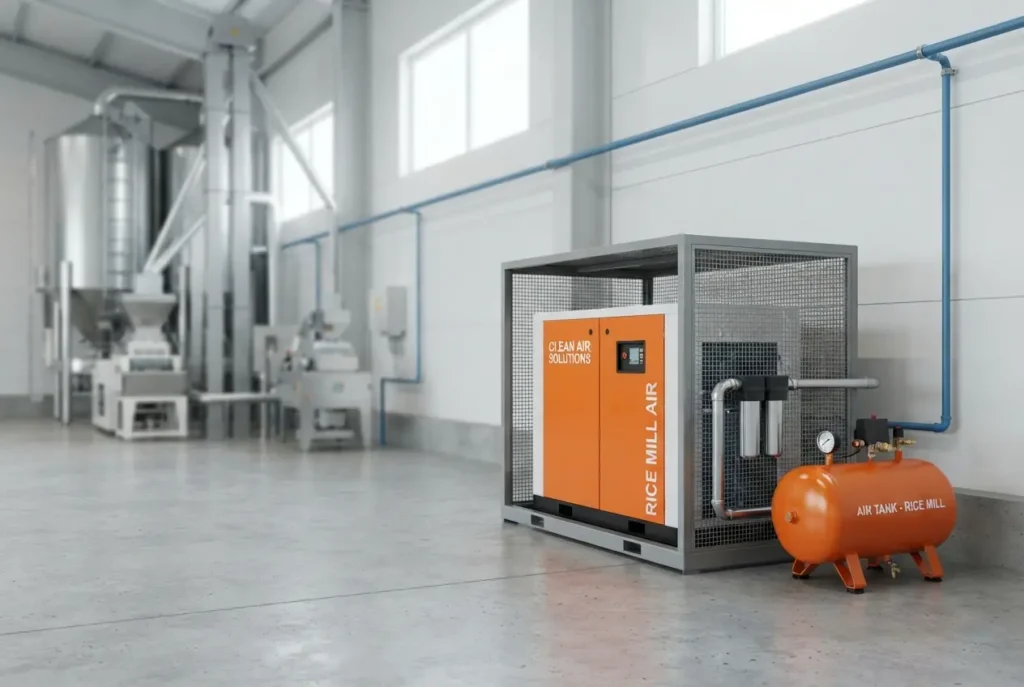
Rice mills and grain processing facilities operate in some of the most unforgiving industrial environments. From pre-cleaning, de-husking, and polishing to color sorting and packaging, airborne grain dust and rice husk chaff permeate every corner of the plant. At the same time, modern grain processing relies heavily on compressed air to power pneumatic actuators, baghouse dust collectors, gate valves, and ultra-sensitive optical color sorters. If your compressed air system falters, your entire production line grinds to an abrupt halt.
Operating a standard industrial compressor in such dusty environments without adequate preparation leads to rapid overheating, premature component wear, clogged intake paths, and contaminated air downstream. Grain processing demands high-volume, clean, continuous air. Meeting these needs requires a purpose-built compressor configuration designed to isolate machinery from ambient contaminants while delivering reliable pressure day after day.
Whether you manage a modern automated mill or an expanding local processing plant, understanding how to configure your system for severe dust protection is key to safeguarding continuous uptime and avoiding costly seasonal downtime.
The Impact of Grain Dust on Air Compressor Performance
Grain dust, bran, and husk particles are abrasive, hygroscopic, and pervasive. When an air compressor pulls ambient air inside, these microscopic particles bypass low-grade filters and cause immediate structural complications. In oil-injected rotary screw systems, dust combines with the lubricating oil to form a thick, abrasive paste. This slurry accelerates wear on screw elements, shortens the lifespan of oil filters, and fouls the internal air-oil separator.
Moreover, grain dust easily blankets the external surfaces of oil coolers and aftercoolers. This insulating layer prevents adequate heat exchange. As heat builds up internally, the compressor faces thermal overload trips, an issue particularly aggravated during hot operating seasons. Facility managers experiencing high ambient temperatures alongside heavy dust can see similar heat management issues highlighted in why screw compressors overheat in south tamil nadu summers and how to fix it.
Multi-Stage Intake Filtration and Room Pressurization
Preventing grain dust from entering the compressor requires an outside-in approach. Relying solely on the standard factory-installed intake filter is rarely sufficient for a rice mill. A robust installation requires a multi-stage defense strategy:
- Dedicated Compressor Rooms: Isolate the compressor system in a dedicated, sealed room positioned away from the primary milling, sorting, and bran collection lines.
- Positive Pressure Ventilation: Install supply fans fitted with washable pre-filters that pull fresh air into the compressor room from an exterior, upwind location. By keeping the room slightly pressurized, dusty air from the milling floor is prevented from leaking inside through doors or wall penetrations.
- Heavy-Duty Cyclonic Pre-Cleaners: For the compressor itself, install a dual-stage or cyclonic air intake assembly. Cyclonic action spins out heavier dust particles and chaff before the air hits the micro-fiber filter media, extending the primary filter element’s service life substantially.
Moisture Control and Protecting Sensitive Color Sorters
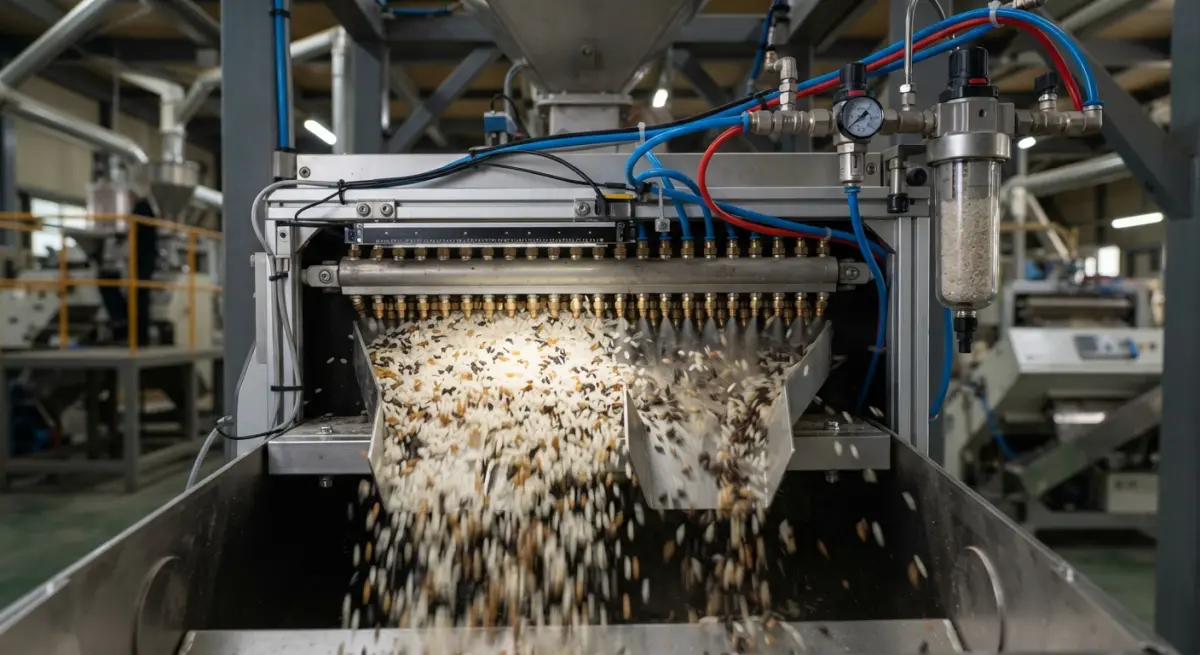
Optical color sorters are the crown jewel of modern rice and grain mills. These machines utilize high-speed pneumatic ejector valves that fire hundreds of times per second to knock discolored grains and foreign material out of the product stream. These micro-valves have tight tolerances. If wet, oily, or dust-contaminated air reaches them, the valves stick, misfire, or fail completely, ruining sorting yield and causing expensive production halts.
Because compressed air generates significant condensation during the compression process, pairing the system with a dependable drying unit is non-negotiable. Exploring why factories need a refrigerated air dryer illustrates how critical dew point depression is for keeping liquid water out of distribution manifolds and downstream machinery.
To preserve final product purity and ensure no trace odors or lubricants transfer onto grains during sorting or packaging, mill designs must adhere to strict air purity criteria. For detailed guidance on achieving appropriate air classes for food-contact applications, review compressed air iso 85731 quality standards for food processing and packaging plants.
Optimizing Downstream Filtration and Pipework Integrity
Even with advanced intake management and drying, microscopic contaminants and carryover vapors must be eliminated before the air reaches end-use points. A properly designed filtration train for grain processing consists of a particulate pre-filter to catch bulk solids, a coalescing filter to merge and drain aerosolized oils and moisture, and an activated carbon stage if direct grain agitation or aeration is involved.
Selecting and maintaining the proper sequence of filters is critical for maintaining adequate line pressure without overworking the compressor motor. You can read more about balancing filtration efficiency with operating restrictions in coalescing vs particulate downstream line filters selection and replacement intervals explained.
In addition to filtration, selecting corrosion-resistant distribution piping is vital. Traditional threaded carbon steel or black iron pipes corrode internally from residual moisture and carry scale straight into delicate pneumatic components. Smooth-bore, modular aluminum piping prevents internal scale buildup and minimizes friction loss throughout extensive mill layouts.
Practical Tips for Continuous Mill Uptime
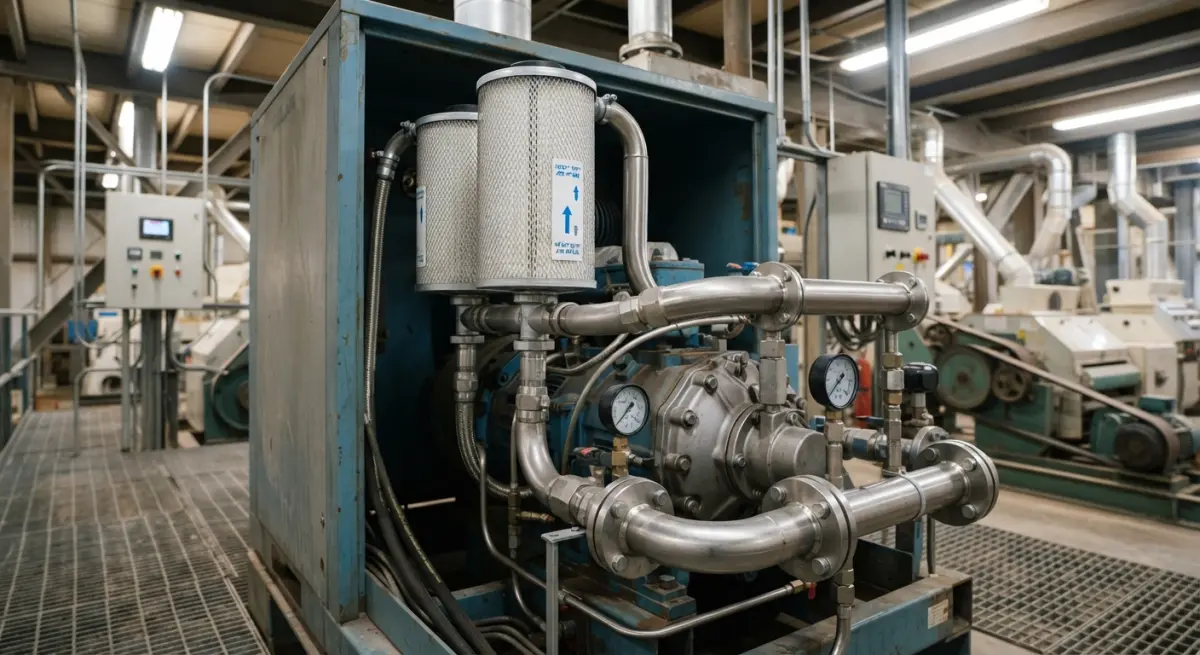
Achieving uninterrupted, round-the-clock operation during peak harvest cycles requires disciplined maintenance protocols. Implement these actionable steps in your daily and weekly operations:
- Implement a Differential Pressure Monitoring Routine: Install differential pressure gauges across your intake filters, oil separator, and downstream line filters. Check them daily. A rising pressure drop signals that filters are filling up, allowing you to schedule replacements before performance drops or valves stick.
- Use Clean Blowdown Practices: Clean cooler faces and room pre-filters using low-pressure dry air regularly. Never blow dust directly toward the compressor intake or intake louvers. Blow away from machinery toward exhaust dampers.
- Establish an Oil Sampling Protocol: Periodically check lubricant clarity and viscosity. If lubricating fluid turns dark quickly or appears gritty, dust is bypassing your filtration path, requiring immediate inspection of intake boots and housing seals.
- Keep Redundant Standby Capacity: Grain processing is continuous and seasonal. Running a single compressor at maximum load with no backup creates catastrophic risk. A multi-compressor setup or a secondary standby unit ensures your mill keeps producing even when routine servicing is underway.
Securing Seamless Processing for Your Mill
Compressed air is effectively the fourth utility in a grain processing facility, directly dictating production velocity, sorting precision, and final product quality. Designing a compressor system equipped with heavy-duty cyclonic intake filtration, positive room ventilation, reliable moisture removal, and multi-stage line filtration transforms a hazardous, dusty environment into an efficient, worry-free operation. By addressing grain dust proactively, you protect your pneumatic equipment, extend machine lifespan, and secure continuous plant uptime throughout the most demanding harvesting seasons.
If you are looking to install a new compressed air network, optimize an existing milling plant, or protect your sensitive color sorters from contamination, reach out to the specialists at sk air solutions to design a robust system tailored specifically for agricultural processing.
Frequently Asked Questions
What is the best type of air compressor for continuous operation in rice mills?
Rotary screw air compressors are the industry standard for rice mills because they are engineered for 100% continuous duty cycles without overheating. Unlike reciprocating piston compressors, rotary screw units deliver steady air pressure required for color sorters and pneumatic conveying while handling dusty environments more effectively.
How do you protect air compressors from severe grain and chaff dust?
To protect compressors from heavy dust, install heavy-duty two-stage or cyclonic air intake pre-filters that capture large chaff particles before they reach the internal filter. Additionally, house the compressor in a dedicated, pressurized compressor room with filtered ambient ventilation to prevent dust accumulation on cooling radiators and internal components.
Why is high-efficiency filtration critical for air compressors running optical color sorters?
Optical sorters use high-speed pneumatic ejector valves that can clog or fail if exposed to trace oil, moisture, or particulate matter from the air supply. Implementing ISO 8573-1 Class 1 certified multi-stage coalescing filters and desiccant dryers prevents costly valve damage and ensures accurate grain sorting without misfires.
How often should air filters and oil be serviced in a grain processing compressor?
Due to extreme airborne dust, intake pre-filters and main air filters should be inspected weekly and replaced every 1,000 to 2,000 operating hours, which is much sooner than in standard industrial environments. Compressor oil and oil filters should be changed every 3,000 to 4,000 hours, accompanied by routine fluid sampling to check for grain dust contamination.
How does an air receiver tank prevent downtime in high-volume rice milling operations?
An appropriately sized receiver tank acts as a pressure buffer that absorbs sudden demand spikes from optical sorters and bag packaging systems without causing line pressure drops. It also serves as a primary cooling stage that allows moisture and bulk contaminants to drop out of the air stream before reaching sensitive downstream pneumatic equipment.
Also read: Spinning Mill Pneumatics: Troubleshooting Sticky Valves and Air Cylinder Failure from Moisture