

In any industrial facility, generating compressed air represents one of the highest ongoing electricity expenses. Plant managers and maintenance engineers constantly search for ways to streamline energy use, yet one of the most common sources of continuous energy loss sits quietly at the bottom of receiver tanks, filter bowls, and refrigerated dryers: the condensate drain. Condensate removal is non-negotiable, as accumulated water and oil emulsion will corrode distribution pipes, foul sensitive pneumatic tools, and ruin finished products.
For decades, electronic timer-controlled solenoid drains have served as the default, low-cost choice for automated moisture removal. However, timer drains operate on rigid schedules rather than actual liquid accumulation, leading to continuous purging of expensive compressed air into the atmosphere. This has led many facilities to transition toward zero-air-loss condensate drains (level-sensing drains), which purge only when moisture is physically present.
Understanding the operational mechanics, real-world air wastage, and return on investment (ROI) between zero-air-loss drains and electronic timer drains is critical for making informed capital upgrades. Choosing the right drainage technology not only protects downstream operations from catastrophic moisture carryover but also directly reduces your plant’s monthly utility bills.
The Operational Mechanics: Timer Drains vs. Zero-Air-Loss Drains
To understand the difference in energy efficiency, one must examine how each drain functions under daily manufacturing conditions.
An electronic timer drain couples a simple brass or stainless-steel solenoid valve to an adjustable solid-state timer. Maintenance staff set two variables: the interval time (how often the valve opens, such as every ten minutes) and the discharge time (how long the valve stays open, such as ten seconds). The solenoid valve fires purely based on clock cycles. It has no mechanism to determine whether the pipe holds two liters of water or pure, pressurized air. When ambient humidity drops or production slows, the valve still opens for its programmed duration, blasting high-pressure air straight out of the system.
A zero-air-loss drain, often utilizing capacitive level sensors or mechanical float mechanisms, functions on demand. Condensate naturally collects inside the drain reservoir. Once the liquid reaches an upper threshold level, the internal sensor sends an electronic signal to actuate a diaphragm or pilot valve, expelling the collected water. Crucially, the valve closes before the liquid level falls below the discharge port, leaving a liquid seal that prevents pressurized air from escaping. If no water is present, the valve never opens.
Quantifying Air Wastage: Why Timer Drains Waste Capital
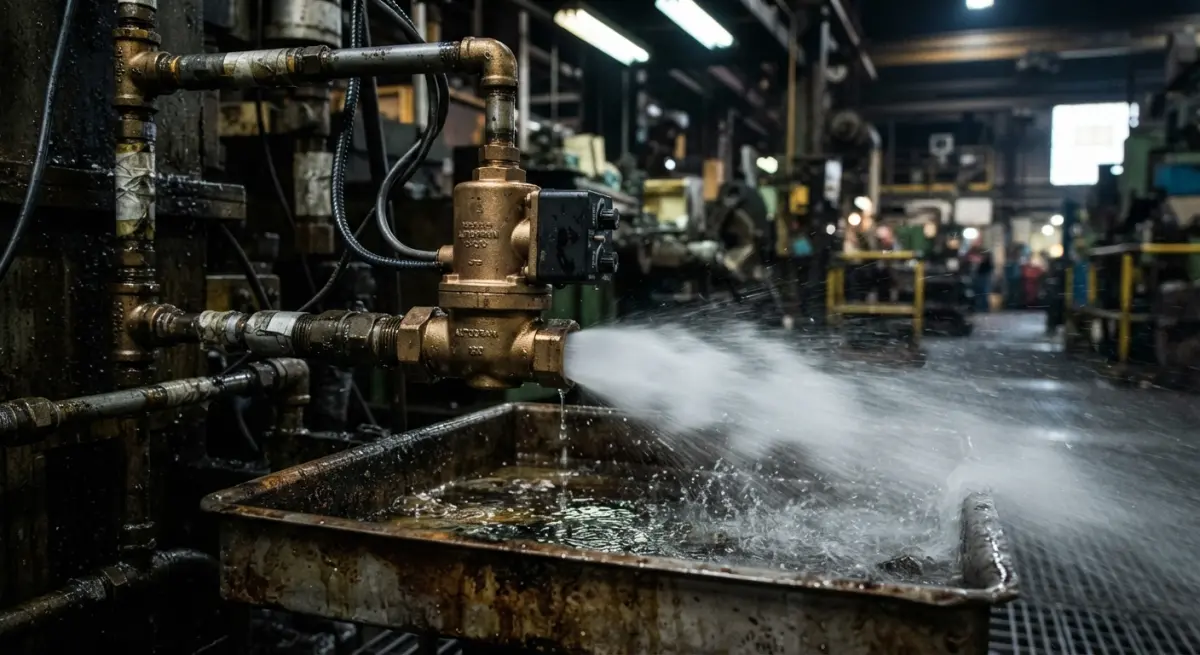
The primary flaw of timer drains is that moisture generation in a compressed air system is highly dynamic, fluctuating based on ambient temperature, relative humidity, and compressor loading. On hot, humid summer afternoons, condensate generation spikes significantly. During cooler night shifts or dry winter months, condensation rates drop dramatically.
Because timer drains cannot adapt to changing environmental conditions, technicians routinely set the timer to handle the worst-case, peak-humidity scenario. This ensures that receiver tanks and downstream filtration do not flood during peak moisture periods. However, during all other operational hours, the timer discharges far longer than necessary. When liquid purges in the first two seconds of a ten-second cycle, the remaining eight seconds vent clean, expensive compressed air directly to the plant floor. Multiply this cycle across multiple drop legs, receiver tanks, and filter banks running twenty-four hours a day, and the cumulative air wastage equals a persistent, artificial demand on your compressor.
Uncontrolled air discharge can also disrupt line pressure. If multiple timer drains trigger simultaneously across a distribution header, the sudden combined blast can induce localized pressure drops, starving sensitive machinery downstream. Maintaining clean, stable air lines often requires understanding system dynamics, much like choosing between loop ring main vs deadend air header piping which layout reduces pressure drop better to maintain uniform pneumatic stability.
Evaluating the Return on Investment (ROI)

When purchasing equipment, the upfront price tag of an electronic timer drain is undeniably lower than that of an intelligent zero-air-loss drain. This price gap often leads procurement teams to favor timer drains. However, the purchase price represents only a fraction of the total lifecycle cost of compressed air equipment; electrical power consumption forms the overwhelming bulk of lifetime expenditure.
The return on investment for a zero-air-loss drain hinges on three core pillars:
- Direct Power Savings: By eliminating the continuous venting of compressed air, the air compressor does not have to run as frequently or stay loaded as long to satisfy baseline pressure demands. In plants utilizing variable frequency drive (VFD) compressors, eliminating artificial demand directly drops motor speed and power draw.
- Maintenance and Clog Resistance: Electronic timer drains typically utilize tiny internal orifices within the solenoid valve. The aggressive mix of water, degraded lubricant, and pipe scale found in compressed air systems easily plugs these tiny ports, causing the valve to stick open (wasting massive volumes of air) or stick shut (flooding downstream lines). High-quality zero-air-loss drains feature larger internal cross-sections and integrated debris strainers, drastically reducing maintenance interventions.
- Downstream Equipment Protection: When a timer drain clogs or fails to discharge properly during a sudden humidity spike, moisture overflows into downstream systems. For applications like yarn spinning, wet air ruins pneumatic cylinders, as highlighted in guides on spinning mill pneumatics troubleshooting sticky valves and air cylinder failure from moisture. Preventing a single batch rejection or line stoppage often pays for the cost of zero-air-loss units immediately.
For most manufacturing plants running continuous shifts, the electrical energy saved by stopping air loss allows a zero-air-loss drain to pay for itself within several months of operation, transforming a capital expense into continuous operational savings.
Strategic Placement and Implementation Tips
Upgrading to zero-air-loss drains requires proper placement to maximize efficiency and protect critical assets throughout the distribution network:
1. Prioritize High-Yield Moisture Points: Begin by replacing drains at the primary moisture collection zones. The wet receiver tank located immediately after the air compressor captures the heaviest slugs of liquid. Installing a high-capacity zero-loss drain here prevents the refrigerated dryer from being overwhelmed.
2. Protect Downstream Filtration: High-efficiency particulate and coalescing filters rely on automatic drains to shed coalesced oil and water aerosols. Understanding your filtration lineup, such as coalescing vs particulate downstream line filters selection and replacement intervals explained, helps identify which filter housings handle enough liquid volume to justify dedicated zero-loss float drains.
3. Ensure Proper Gravity Feeding: Zero-air-loss drains depend on gravity to allow condensate to enter the sensing chamber smoothly. Always install the drain below the discharge port of the vessel or filter, and install an equalization balance line if venting air blocks fluid entry into the reservoir.
4. Include Drainage in Leak Audits: Stuck or leaking timer drains are essentially artificial leaks. Plant teams learning how to conduct an ultrasonic compressed air leak audit in manufacturing plants should regularly scan timer drains; an audible hiss from a drain when no water is exiting indicates immediate energy waste.
Upgrading Your Condensate Strategy
Compressed air is an essential utility, but letting it vent away through outdated condensate equipment silently drains your operational budget. While timer drains may appear cost-effective during initial procurement, their rigid cycling guarantees continuous air wastage, erratic line pressure, and higher risk of mechanical clogging. Transitioning to zero-air-loss condensate drains matches discharge strictly to actual moisture volume, delivering rapid payback through measurable energy savings and reliable system protection.
If your facility is looking to modernize its compressed air system, eliminate costly air leaks, or optimize downstream air treatment, the engineering team at sk air solutions is here to help. Reach out to audit your plant’s air drainage, review system performance, or request an air compressor quote tailored to your plant’s efficiency goals.
Frequently Asked Questions
How much compressed air and money does a timer drain waste compared to a zero-air-loss drain?
A standard timer drain operating at 100 PSI typically wastes between 3 to 10 CFM of compressed air during each open cycle, venting expensive air long after condensate clears. Over a year of continuous operation, this wasted air equates to roughly $300 to $1,500 in lost electricity per drain, whereas a zero-air-loss drain vents only liquid and eliminates these air losses entirely.
What is the typical ROI and payback period when upgrading to zero-air-loss condensate drains?
Most industrial facilities see a full return on investment (ROI) within 3 to 12 months per drain when replacing timer-controlled units with zero-air-loss alternatives. The exact payback period depends on your local electricity rates, system pressure, and total annual operating hours, but the dramatic reduction in wasted artificial load pays for the hardware quickly.
Why do timer condensate drains waste so much compressed air?
Timer drains rely on fixed, mechanical intervals that purge for a set duration regardless of how much moisture is actually present in the system. Because moisture levels fluctuate with ambient humidity and compressor load, the valve routinely blows out fully pressurized, clean air long after all condensate has been discharged.
How do zero-air-loss drains detect and discharge moisture without venting compressed air?
Zero-air-loss drains utilize internal electronic capacitance sensors or mechanical float mechanisms to continuously monitor the condensate reservoir level. The valve opens only when liquid reaches a critical high point and closes instantly before any compressed air can escape, ensuring a 100% liquid-only discharge.
Are zero-air-loss drains reliable in dirty compressed air environments containing rust and sludge?
Yes, modern zero-air-loss drains are engineered with integrated particulate strainers, wide internal discharge ports, and non-clogging direct-acting valves specifically designed to handle heavy oil-water emulsions and scale. Additionally, most advanced electronic models include intelligent self-cleaning alarm cycles that clear obstructions and alert maintenance teams without manual intervention.
Also read: Compressed Air for Air-Jet Weaving Looms: Managing Demand Spikes During Pick Insertion